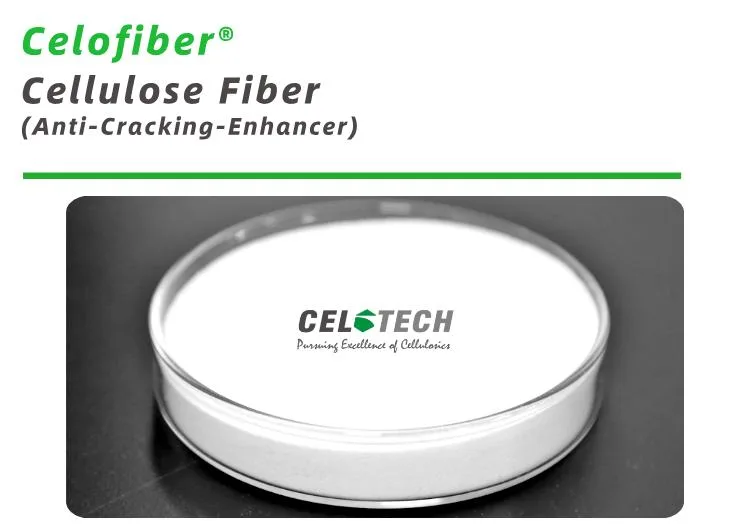
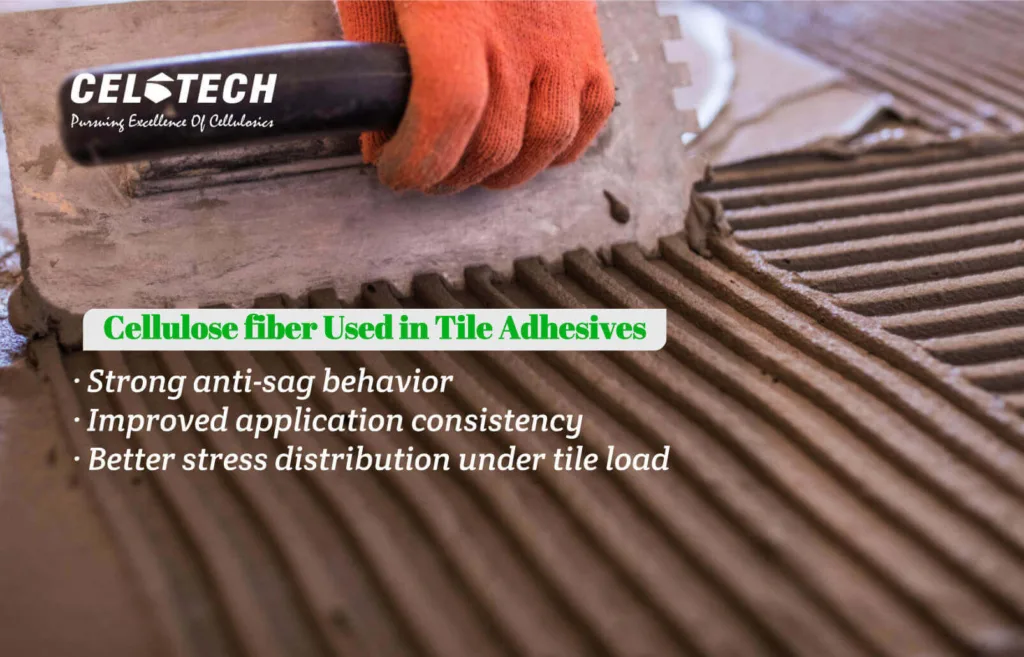
Cellulose fiber has become an essential functional additive in today’s construction industry, offering a balanced combination of performance improvement, application reliability, and sustainability. Derived from natural cellulose, it works through physical reinforcement and moisture regulation rather than chemical reaction. This article explains the working mechanisms and benefits of cellulose fiber in dry-mix mortars and plasters, tile adhesives, and fiber-reinforced concrete, with comparative data and practical insights.
Cellulose fiber Used in Dry-Mix Mortars and Plasters
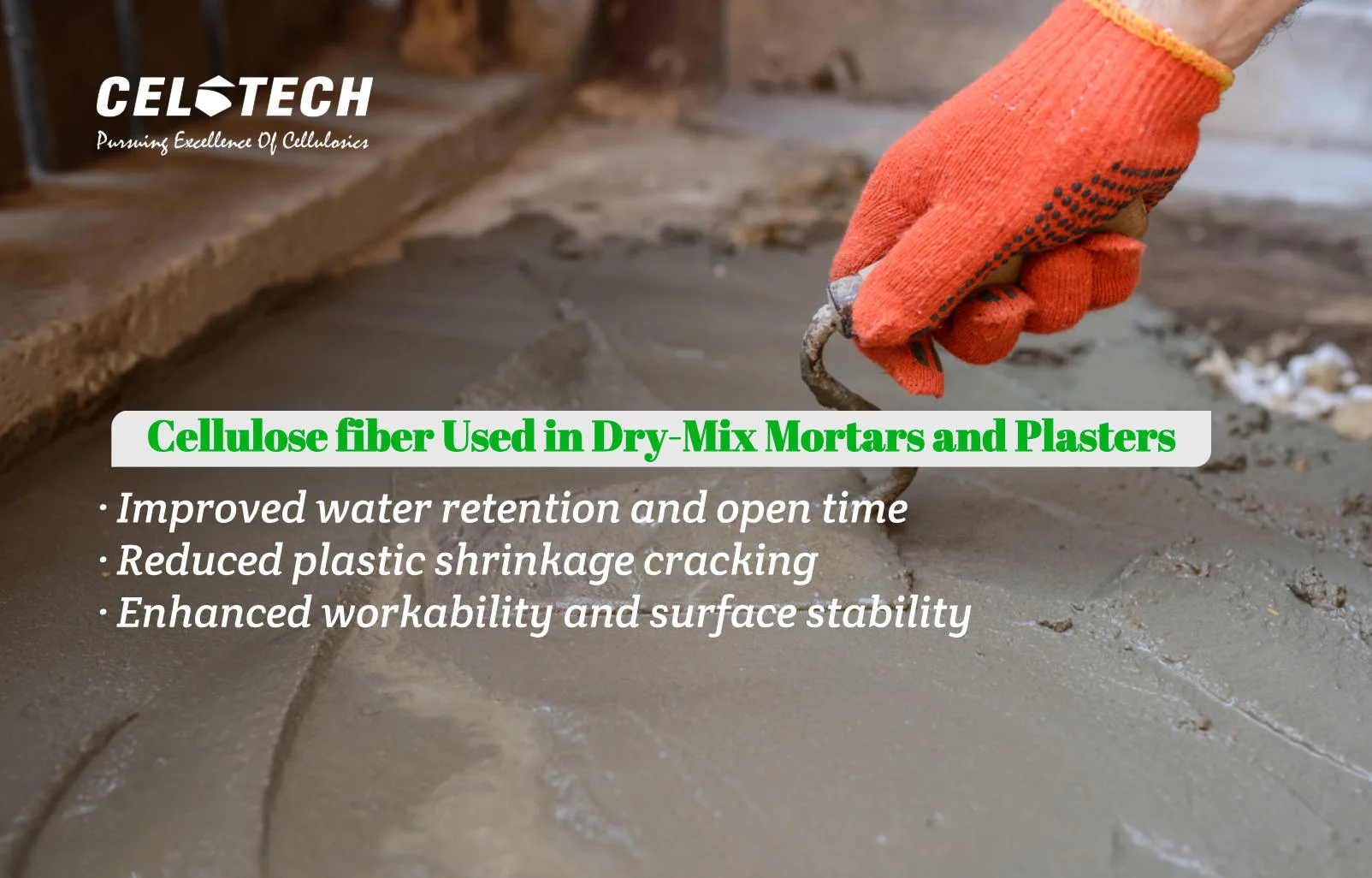
In dry-mix mortars and plaster systems, cellulose fiber forms a three-dimensional fiber network that enhances internal cohesion and water distribution. Its hydrophilic structure allows it to absorb and slowly release water during hydration, ensuring more uniform cement curing, especially on highly absorbent substrates.
Key adcantages include:
- Improved water retention and open time
- Reduced plastic shrinkage cracking
- Enhanced workability and surface stability
Typical tests show that cellulose fiber can increase water retention by 15–25%, whereas polypropylene (PP) fiber provides little to no improvement. In plastic shrinkage crack reduction, cellulose fiber often achieves up to 70–80% crack area reduction, compared with 40–60% for PP fiber at similar dosages.
Cellulose fiber Used in Tile Adhesives
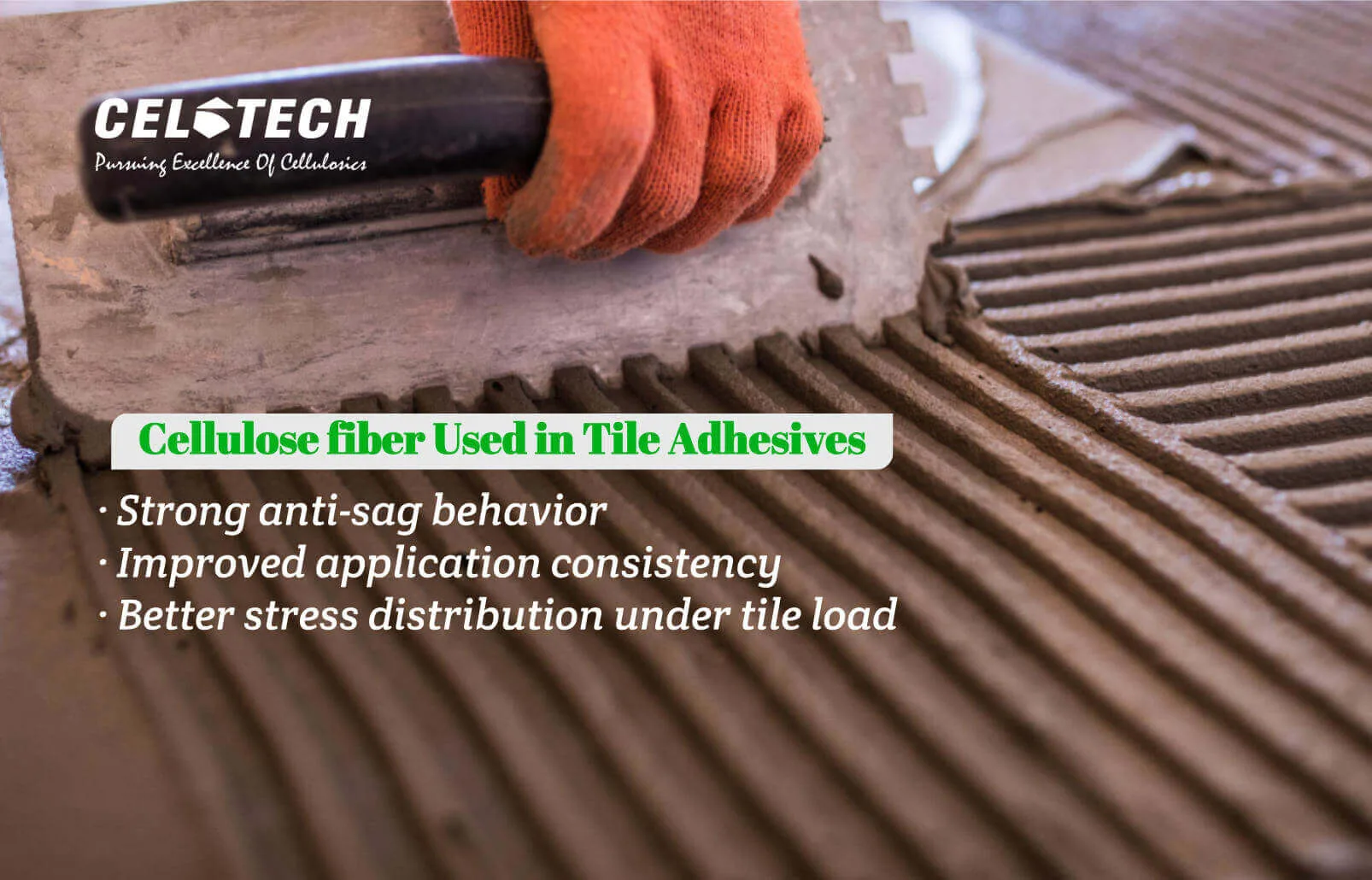
In cement-based tile adhesives, cellulose fiber primarily acts as a rheology modifier and anti-sag agent. By increasing internal friction and cohesion, it prevents tile slippage on vertical surfaces and improves wetting and load-bearing stability.
Performance benefits include:
- Strong anti-sag behavior
- Improved application consistency
- Better stress distribution under tile load
While PP fibers mainly contribute to post-curing crack control, cellulose fiber significantly enhances fresh-state performance. Anti-sag testing typically shows 30–50% higher resistance to tile slip compared with formulations using only synthetic fibers.
Cellulose fiber Used Fiber-Reinforced Concrete
In fiber-reinforced concrete, cellulose fiber is particularly effective during the early hydration stage. It disrupts capillary water channels, retains internal moisture, and bridges micro-cracks before they propagate.
Benefits include:
- Effective plastic shrinkage crack control
- surface integrity
- Enhanced durability
Cellulose fiber can reduce plastic shrinkage cracking by up to 80%, outperforming PP microfibers in early-age crack prevention, although PP fibers remain stronger in long-term structural reinforcement.
Conclusion
Cellulose fiber is a multifunctional performance enhancer rather than a simple reinforcement additive. Products such as CELOFIBER® CF200 provide measurable advantages in workability, crack control, and durability across a wide range of construction materials. When compared with conventional synthetic fibers, cellulose fiber delivers broader functional value and supports the growing demand for high-performance and sustainable building solutions.