
In architectural decoration, the quality of tile laying depends largely on the performance of tile adhesive(tile floor adhesive), which affects the stability, durability, appearance, and even the safety of the space. Therefore, it is essential to conduct strict performance tests. Only by ensuring that tile adhesives meet the standards can the quality of tile laying be guaranteed. This article provides an in-depth introduction to common testing items and their corresponding standards.
Routine testing items and standards for cement-based tile adhesives
According to the performance requirements of tile adhesive, it can be classified into C1 type (ordinary type) and C2 type (enhanced type). Common testing items and judgment criteria are as follows:
| Categories | Performance | Standard |
| C1-Ordinary cement-based adhesive
|
Adhesion bonding strength/MPa | ≥0.5 |
| Adhesion bonding strength after immersion in water/MPa | ≥0.5 | |
| Adhesion bonding strength after thermal aging/MPa | ≥0.5 | |
| Adhesion bonding strength after freeze-thaw cycle/MPa | ≥0.5 | |
| Adhesion bonding strength/MPa when air-conditioned for ≥20min | ≥0.5 | |
| C2-Reinforced cementitious adhesive
|
Adhesion bonding strength/MPa | ≥1.0 |
| Adhesion bonding strength after immersion in water/MPa | ≥1.0 | |
| Adhesion bonding strength after thermal aging/MPa | ≥1.0 | |
| Adhesion bonding strength after freeze-thaw cycle/MPa | ≥1.0 | |
| Adhesion bonding strength/MPa when air-conditioned for ≥20min | ≥0.5 |
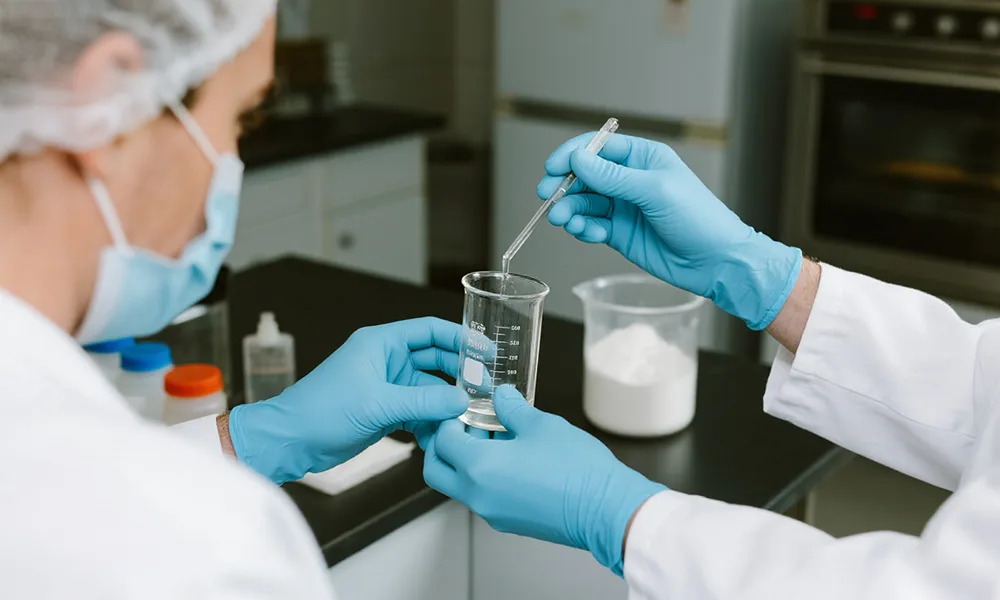
Experimental conditions
The performance test of tile adhesive should be conducted under the following experimental conditions:
- Ambient temperature: (23±2)℃
- Relative humidity: (50±5)%
- Circulating air velocity in the experimental area: ≥0.2 m/s
Test time: From the moment the rubber compound is mixed with water or liquid until the tensile bond strength is measured.
Main testing items and methods
Tensile bond strength
- The specimens were cured under experimental conditions for 27 days.
- Bond the drawing head with epoxy high-strength adhesive and let it stand for 24 hours.
- The bonding strength was determined at a loading rate of (250±50) N/s.
- Fast-hardening tile adhesive should bond the pull-out head at least 2 hours before the test.
Test results: expressed in Newton (N).
Tensile bond strength after immersion
- The specimens were cured under experimental conditions for 7 days.
- Immerse in water at standard temperature for 20 days;
- Remove the specimen, dry the surface, bond the drawing head, and let it stand for 7 hours.
- Immerse again in water for 17 hours and immediately conduct a tensile strength test.
Test results: expressed in Newton (N).
Tensile bond strength after thermal aging
- The specimens were cured under experimental conditions for 14 days.
- Put it in an oven at (70±3)℃ for 14 days;
- After removing it, bond the drawing head and let it stand for 24 hours.
- The test was conducted at a loading rate of (250±50) N/s;
Test results: expressed in Newton (N).
Tensile bond strength after freeze-thaw cycles
The specimens were cured under experimental conditions for 7 days and then immersed in water for 21 days.
Perform 25 freeze-thaw cycles:
- Remove it from water, cool it to (-15±3)℃, and hold it for 2 hours ±20 minutes.
- Maintain at this temperature for 2 hours ±20 minutes;
- Place the specimen in water at (20±3)℃, heat it to (15±3)℃, and maintain it at this temperature for ≥2 hours.
- Repeat the above process until 25 cycles are completed.
After the test is completed, bond the drawing head under standard conditions and conduct a tensile test within 24 hours.
Test results: expressed in Newton (N).
Through multiple performance tests, including routine, immersion, thermal aging, and freeze-thaw cycles, the bonding strength and stability of tile adhesive in various environments can be comprehensively evaluated. These tests are not only important bases for production enterprises to carry out quality control, but also key links in construction acceptance and project quality assurance. Only by strictly implementing standardized tests can we ensure that the tile adhesive has good durability and safety in practical applications, thereby providing a strong guarantee for the long-term stability and aesthetics of construction projects.
In conclusion, it is crucial to select a high-quality tile adhesive partner.
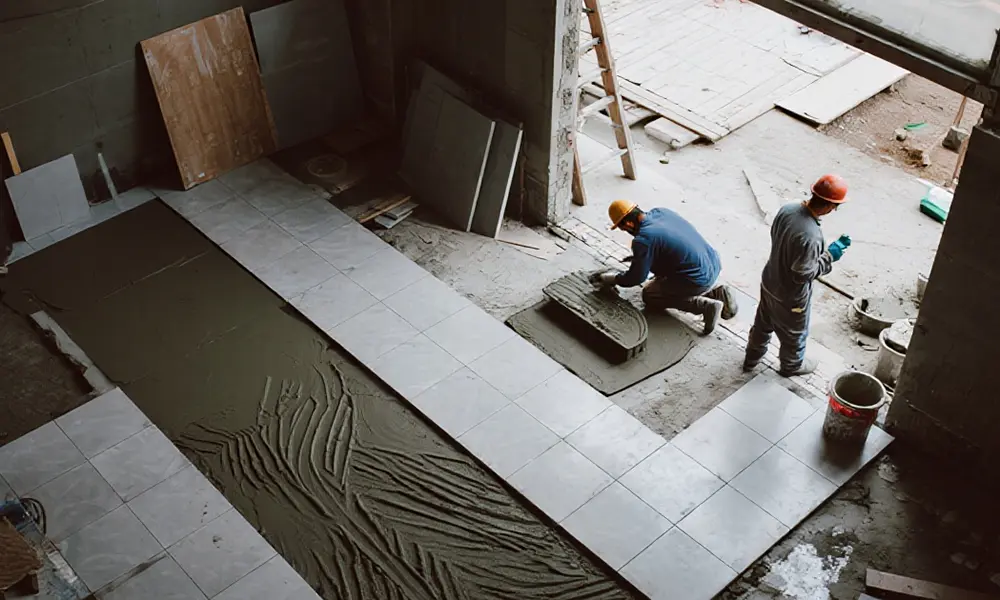
Recommend Celotech tile adhesive
Celotech has been dedicated to researching, developing, and producing high-quality tile adhesives for many years.
Regarding product quality
Strong adhesion: Effectively prevents tiles from hollowing and falling off, ensuring long-term stability.
Excellent weather resistance: waterproof, heat-resistant, and freeze-thaw resistant, suitable for various indoor and outdoor environments.
Convenient construction: No need to soak bricks, thin bonding process, saving materials and labor, and efficient construction.
Green and environmentally friendly: Low VOC, non-toxic and harmless, safe and healthy, meeting the requirements of green buildings.
In terms of use value
Wide application: It can meet the needs of large-sized tiles, stone, floor heating, and wet areas.
High cost performance: Reduces rework and maintenance costs, resulting in long-term savings.