
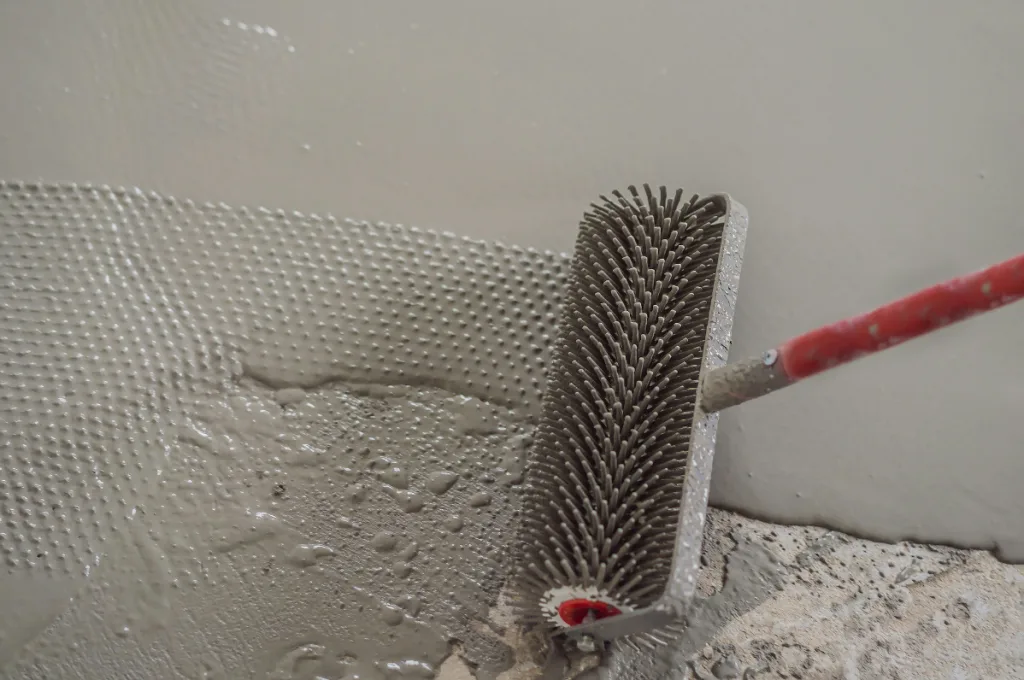
In common people naked eyes, “unevenness” appeared in concrete floor will be concluded as surface uneven. However, in actual construction practice, unevenness is usually a symptom of deeper substrate issues such as weak surface laitance, moisture movement, or improper curing conditions.
When a Concrete Floor Needs Leveling
In professional flooring work, leveling is only required when surface irregularity affects installation performance or long-term floor system stability. Not all uneven concrete requires correction. Some variations are acceptable depending on final flooring type.
Typical conditions where leveling is required:
- Surface irregularities affecting tile or vinyl installation
- Localized low spots causing water accumulation
- Uneven transitions between slabs or construction joints
However, leveling should not be used as a corrective solution for structural movement or unstable slabs.
Why Concrete Floors Become Uneven
Concrete surface irregularity is typically caused during early construction stages rather than after completion.
Yaygın nedenler şunlardır:
- Construction processes and technical issues
- Maddi faktörler
- Environmental and maintenance issues
- Yüzey hazırlığı
Pre-Leveling Inspection
- Substrate inspection and treatment—ensure the concrete substrate is sound, clean, free of oil stains, and devoid of loose materials. Any existing cracks must be filled prior to application.
- Grinding and vacuuming—grinding to remove weak surface layer, vacuum cleaning to remove fine dus.
- Application of bonding agent—dilute the Laticrete Self-Leveling Bonding Agent (recommended) with water according to the specified mixing ratio.
It is recommended to apply two coats (the first coat diluted to a thinner consistency, the second slightly thicker); apply using a roller or brush in a cross-hatch pattern to ensure the substrate is effectively sealed and free of standing water, thereby enhancing the adhesion between the self-leveling compound and the substrate.
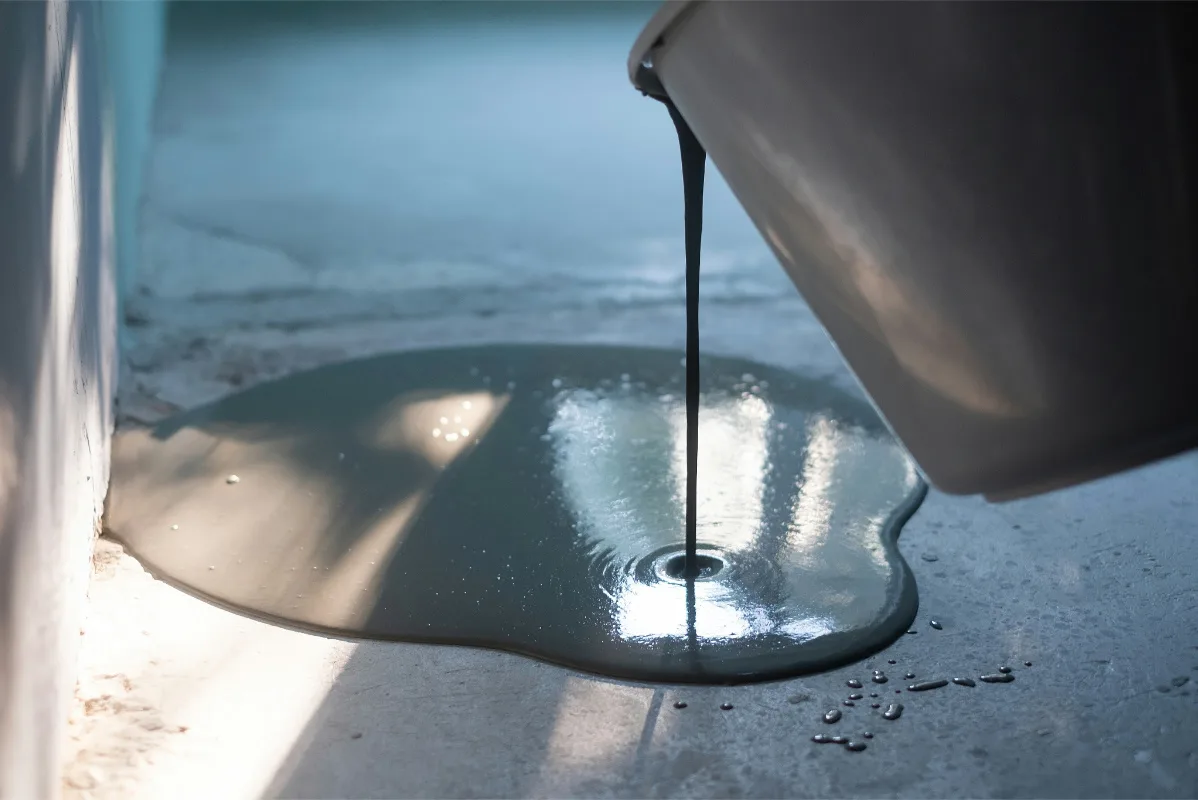
How Self-Leveling Compound Works (Material Behavior)
Self-leveling compounds rely on controlled rheology rather than excess water.
Flow behavior is designed through formulation balance. If the system is too fluid, particle separation may occur. If too stiff, leveling cannot complete before setting.
Key functional components:
| Bileşen | İşlev |
|---|---|
| Selüloz eter | water retention and workability control |
| Polimer tozu | yapışma iyileştirmesi |
| Köpük kesici | air control and surface stability |
Step-by-Step: How to Level a Concrete Floor
Floor leveling must follow a controlled sequence. In real site conditions, skipping or altering steps is a common cause of failure.
- Inspect slab condition: Check substrate stability, moisture presence, and crack behavior before any application.
- Surface grinding and cleaning: Remove weak surface layers and contaminants. Mechanical preparation is preferred in professional work.
- Çatlak onarımı: Stable cracks can be treated. Active cracks should be evaluated separately.
- Astar uygulayın: Ensure uniform absorption control across the substrate.
- Mixing with correct water ratio: Water content must follow manufacturer guidance. Excess water is a known failure factor in cementitious systems.
- Pour and spread continuously: Maintain wet edges to avoid visible joints between batches.
- De-airing and finishing: Spike rolling is used to remove trapped air and improve surface consistency.
Common Mistakes in Floor Leveling
Most failures are caused by execution errors rather than material defects. Typical issues include:
- Excessive water addition during mixing
- Skipping primer application
- Yetersiz yüzey hazırlığı
- Applying over contaminated or damp substrate
- Ignoring crack movement
How Long Does Floor Leveler Take to Dry?
Drying behavior depends on environmental conditions and layer thickness.
Önemli ayrım:
- Surface hardening ≠ Full curing
| Şart | Practical Observation |
|---|---|
| İnce uygulama | early walkable stage after surface sets |
| Daha kalın uygulama | longer internal curing period |
Not: Exact timing varies significantly between systems and site conditions.
How to Know If the Job Is Successful
Success is not defined immediately after installation. Long-term indicators include:
- Stable surface without dusting
- No hollow sound under impact
- No visible edge cracking
- No debonding after curing
- Consistent flatness under flooring system
Final Engineering Insight
Floor leveling is not a cosmetic process. It is a substrate control system that depends on correct diagnosis, proper surface preparation, and stable material behavior during curing.