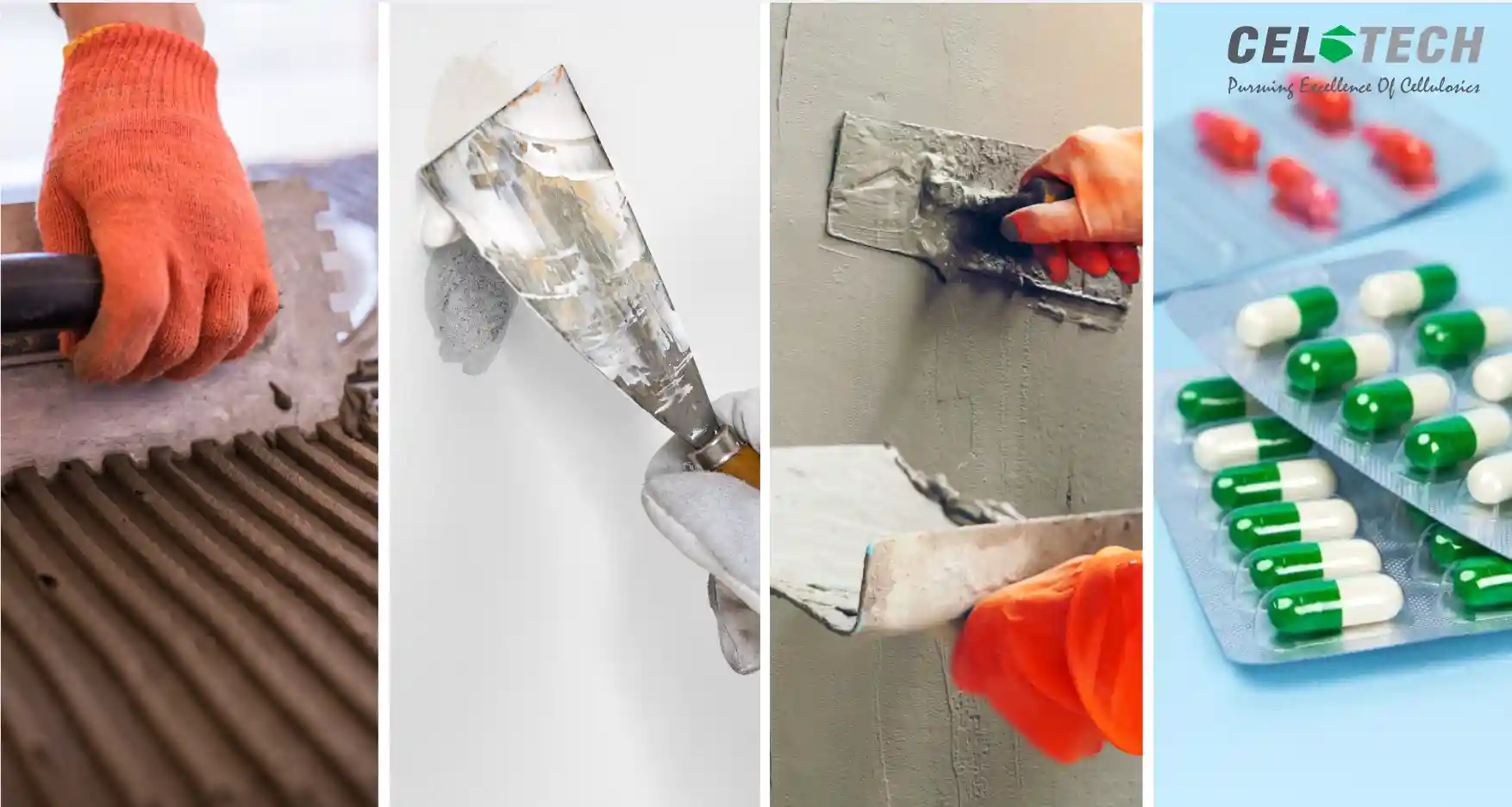
Hydroxypropyl Methylcellulose (HPMC) is a versatile cellulose derivative widely used across construction, pharmaceuticals, coatings, and food applications. Its primary functions—viscosity control, water retention, and film formation—make it essential for tile adhesives, dry-mix mortars, industrial coatings, and even pharma excipients.
Selecting the right supplier is not just about price—it determines batch-to-batch consistency, regulatory compliance, supply reliability, and the ability to troubleshoot issues quickly. While many “top 10 HPMC manufacturer” lists exist online, they rarely provide actionable guidance, practical experience insights, or risk mitigation strategies.
This guide consolidates global Tier 1 producers, regional Tier 2 suppliers, practical selection tips, and supply chain insights, giving engineers and procurement teams a grounded, experience-based view to make informed decisions.
1. Global Tier 1 HPMC Manufacturers
Tier 1 suppliers are recognized for high-quality, standardized HPMC, robust global supply chains, and mature technical support. They are ideal when batch-to-batch consistency, regulatory compliance, and large-volume supply are critical.
Notes: Based on experience, here are some HPMC suppliers worth considering—the order is not a ranking.
| Supplier | Headquarters | Key HPMC Brands | Strengths | Recommended Applications | Notes / Practical Insights |
| Ashland Global Holdings Inc. | USA | BENECE™ | Strong traceability, pharmaceutical-grade HPMC, consistent rheology | Pharmaceuticals, coatings, construction adhesives | Premium pricing; excellent for R&D-intensive projects |
| Dow Chemical Company | USA | METHOCEL™ | Wide global distribution, stable performance | Construction mortars, industrial applications | Reliable for large-volume supply; good for projects needing consistent viscosity |
| Shin-Etsu Chemical Co., Ltd. | Japan | METOLOSE® | High-end pharma and industrial-grade quality | Pharmaceuticals, high-performance construction products | Excellent for complex formulations; batch consistency superior |
| BASF SE | Germany | Viscogum® series | Broad industrial experience, chemical-grade specialization | Construction adhesives, industrial coatings | Strong global logistics and technical support; premium grade |
| Evonik Industries AG | Germany | Methocel® / Viscogum® | Specialty grades for industrial and pharma | Coatings, adhesives, specialty mortars | Extensive R&D support; robust European distribution network |
| Lotte Fine Chemical | Korea | Lotte HPMC | Broad application coverage, stable viscosity | Construction, pharmaceuticals, food-grade products | Well-established East Asian supply chain; cost-effective Tier 1 alternative |
| Mitsui Chemicals | Japan | Methocel® / Pharma-grade | R&D-driven, stable quality | Pharmaceutical excipients, specialty adhesives | Good for tailored regional formulations; ISO/GMP compliance |
Practical Tip: Tier 1 suppliers are best when consistency, regulatory compliance, and technical support outweigh cost concerns. Lead times are predictable, and global logistics are generally stable, but pricing is higher. My experience shows that Tier 1 is indispensable for Northern Europe and North American projects, where certification and traceability are strictly monitored.
2. Tier 2 Regional HPMC Suppliers/Manufacturers
Tier 2 suppliers often provide flexible quantities, competitive pricing, and fast local support. They are ideal for cost-sensitive or regional projects, or when testing new formulations before committing to Tier 1 volumes.
| Supplier | Headquarters | Key Advantages | Typical Applications | Notes / Practical Insights |
| Nippon Soda | Japan | Flexible grades, consistent quality | Construction, adhesives | ISO and JIS certifications; suitable for projects needing rapid delivery and moderate batch volumes |
| Lotte Fine Chemical | Korea | Localized stock, stable supply | Mortars, adhesives, pharma excipients | Well-suited for East Asia; technical support available for formulation guidance |
| Sekisui Chemical | Japan | Specialty cellulose, tailored solutions | Coatings, adhesives, pharmaceuticals | Offers customized grades and pilot testing; useful for high-spec regional projects |
| Celotech | China / Asia export | Reliable viscosity control, fast sample delivery, experienced technical support | Tile adhesives, dry-mix mortars, construction additives | Viscosity range 300–75,000 mPa.s (Brookfield, 2% water solution); suitable for virtually all construction additive applications. Acts as an excellent large-factory alternative for regional projects, delivering near-Tier 1 performance for viscosity consistency and technical guidance. Competitive pricing and rapid sampling make it ideal for fast-paced tile adhesive or dry-mix mortar projects in Asia and Middle East. |
Practical Experience Insight:
- In Asian projects, Tier 2 suppliers like Celotech have repeatedly demonstrated batch-to-batch consistency close to Tier 1 products for tile adhesive applications.
- Domestic Tier 2 suppliers may have lower pricing, but for Northern Europe or North American projects, lead times and certification support can be insufficient.
- Celotech balances cost, reliability, and technical guidance, making it a strong alternative to high-end Tier 1 HPMC for regional projects.
3. How to Choose the Right HPMC Supplier: Practical Guide
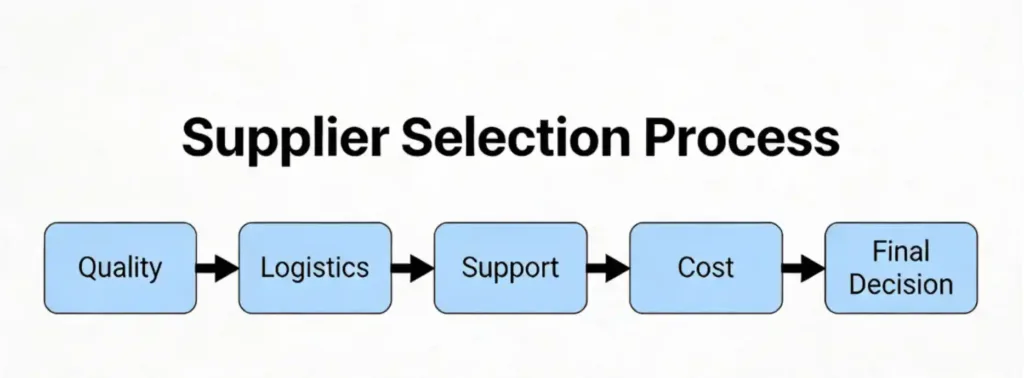
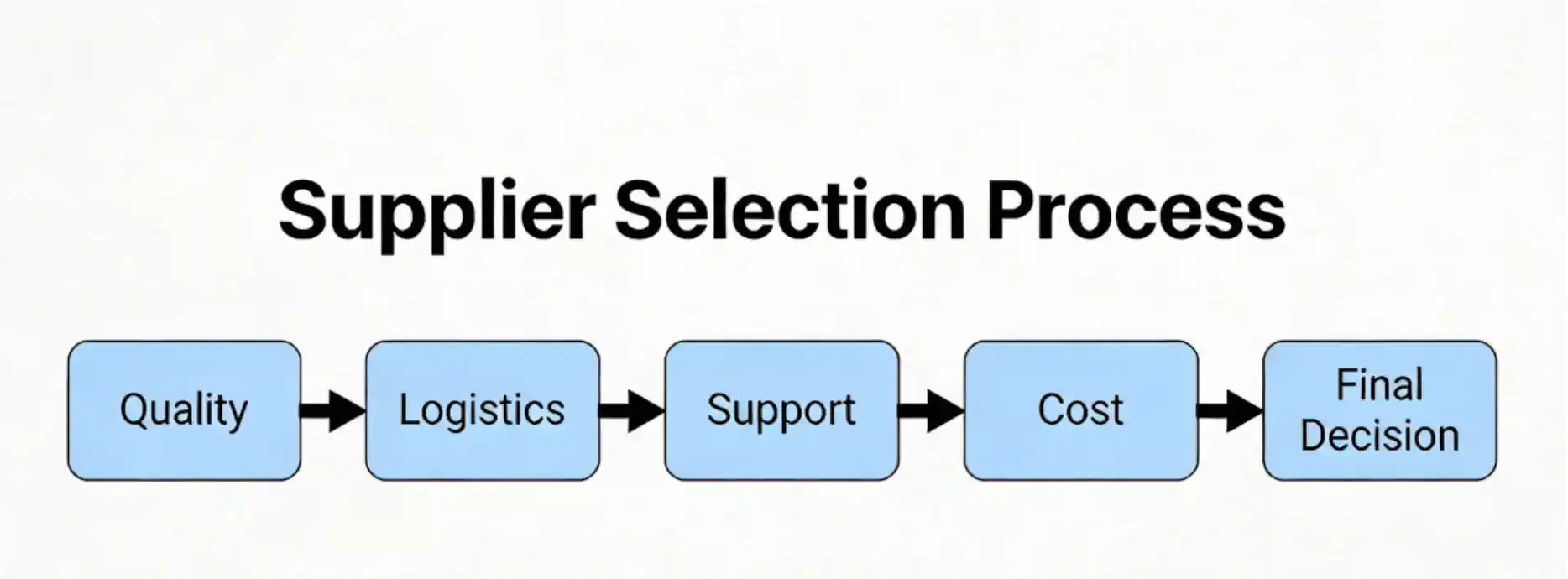
When evaluating HPMC suppliers, focus on four key dimensions:
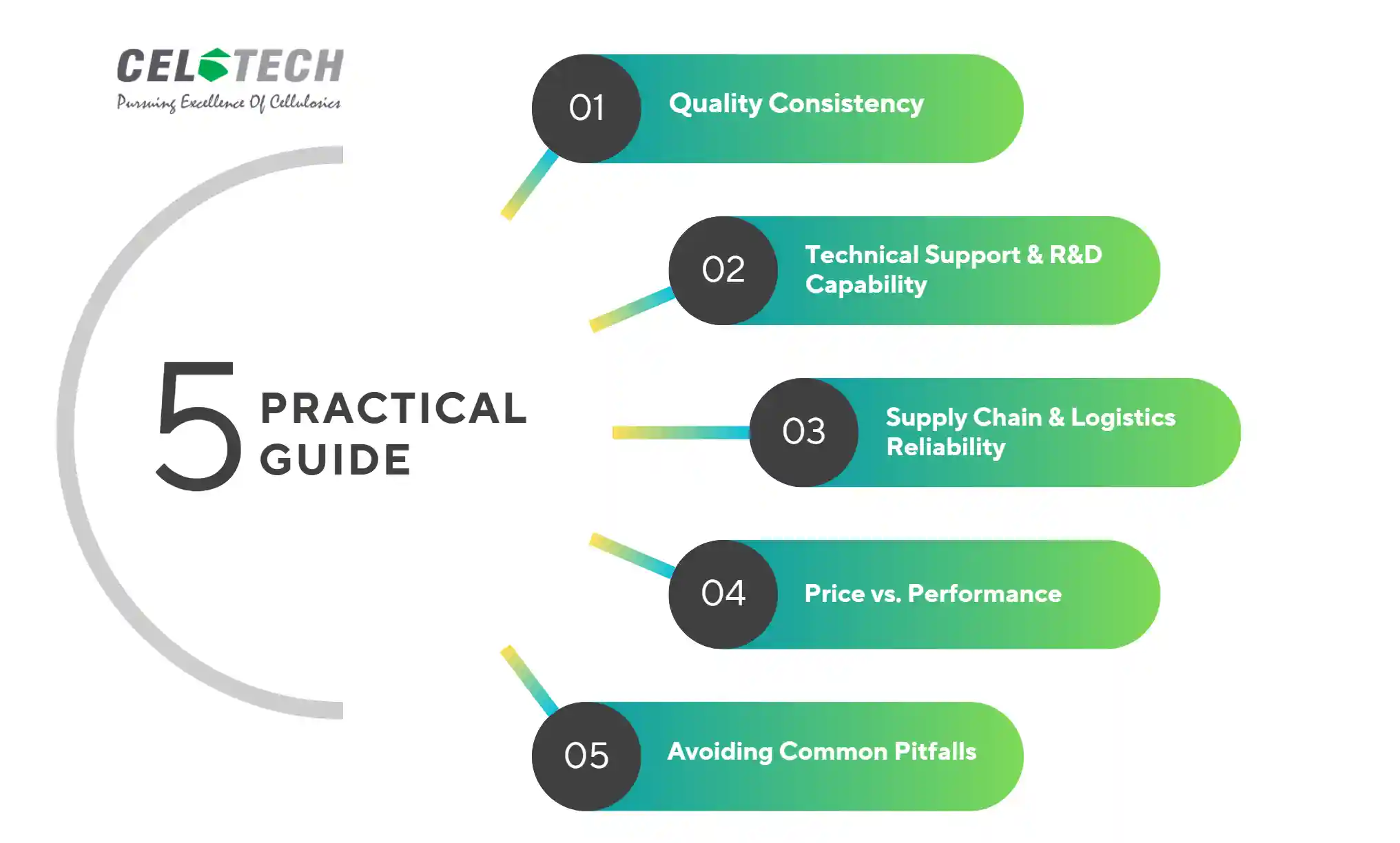
3.1 Quality Consistency
- Request batch analysis certificates, viscosity, and rheology data.
- Check traceability and certifications (ISO, GMP for pharma-grade HPMC).
- Prefer suppliers sharing production parameters for reproducibility.
Experience Tip: I’ve seen projects where viscosity deviation >10% caused tile adhesives to fail small-scale testing; Tier 2 suppliers like Celotech offer controlled parameters to mitigate this risk.
3.2 Technical Support & R&D Capability
- Tier 1 suppliers generally provide global R&D support; Tier 2 excels in localized, hands-on guidance.
- Choose suppliers offering formulation guidance, customized grades, or pilot trials.
- Celotech offers fast on-site technical advice and sample testing, helping optimize tile adhesive and mortar formulations quickly.
3.3 Supply Chain & Logistics Reliability
- Confirm suppliers can meet long-term volume requirements.
- Evaluate lead times, shipping reliability, and contingency planning.
- Tier 1 offers predictable international logistics; Tier 2, like Celotech, offers faster regional delivery.
Practical Suggestion: Stagger orders across Tier 1 and Tier 2 suppliers to reduce risk from port congestion, geopolitical tensions, or shipping strikes.
3.4 Price vs. Performance
- Premium Tier 1 ensures high purity, stability, and certifications but at higher cost.
- Regional Tier 2 suppliers offer cost savings for less critical or experimental projects.
- Consider total cost of ownership, including shipping, technical support, and waste from inconsistent batches.
3.5 Avoiding Common Pitfalls
- Don’t rely solely on brand name or rankings.
- Always request samples and pilot testing in your specific formulation.
- Verify technical support availability in your region.
- Evaluate long-term supply stability, especially for construction or industrial applications.
- Incorporate redundancy: use multiple regional Tier 2 suppliers to hedge against unforeseen disruptions.
4. Geopolitical and Supply Chain Considerations
Recent geopolitical events (e.g., conflicts affecting Eastern Europe, trade tensions, Suez Canal disruptions) highlight the vulnerability of global supply chains. Practical steps include:
- Advance stocking: Keep 2–3 months of critical HPMC on hand.
- Multi-region sourcing: Combine Tier 1 global suppliers with Tier 2 regional suppliers to ensure continuity.
- Freight optimization: Air freight for urgent trials; sea freight for bulk. Monitor packaging and storage conditions to maintain viscosity stability.
- Documentation readiness: Certifications (ISO, GMP, REACH, Kosher/Halal) should be verified well before shipment, especially when working with Tier 2 suppliers outside your home region.
Experience Insight: In Northern Europe projects, Tier 2 suppliers often caused delays and additional certification checks. Celotech, with its fast sample delivery and viscosity stability, proved closer to Tier 1 reliability for Asian and Middle Eastern projects.
5. Key Takeaways-Practical Guidance from Experience
- Combine Tier classification, technical evaluation, and real-world experience for informed supplier selection.
- Avoid relying solely on public “top 10 lists”—value comes from pilot testing, technical support, and supply chain reliability.
- Regional suppliers like Celotech can offer cost-effective, technically supported solutions, particularly for tile adhesives, dry-mix mortars, and localized projects.
- Always plan for supply chain risks: stock 2–3 months ahead, consider multiple regional suppliers, and weigh sea vs air freight based on urgency.
- Viscosity range and technical guidance are as important as brand reputation; practical experience often outweighs pure marketing claims.
6. FAQ
Q1: How to test batch consistency before placing a large order?
A: Request viscosity profile, rheology data, and pilot sample testing in your exact formulation. Compare results across multiple batches.
Q2: Should I choose Tier 1 or Tier 2 for a regional tile adhesive project?
A: Tier 2 is sufficient if cost and delivery speed are priorities. Tier 1 is recommended for high-spec adhesives, pharma-grade HPMC, or projects where certification compliance is strict.
Q3: How can Celotech support project trials?
A: Fast sample delivery, viscosity guidance, and local technical support enable quick pilot testing and formulation optimization for tile adhesives and dry-mix mortars.
Q4: What certifications are critical for HPMC in pharma or food applications?
A: Look for GMP, USP/NF, Kosher/Halal, REACH compliance depending on end-use.
Q5: How to mitigate shipping and geopolitical risks?
A: Stagger orders, use multi-region suppliers, maintain rolling stock, and carefully select air vs sea freight based on urgency and batch sensitivity.