HPMC and CMC are both white or off-white specialty chemical powders derived from natural cellulose through chemical modifications. These two widely used cellulose derivatives have similar characteristics but have differences in performance. We will help you understand the differences between HPMC and CMC, and choose the right cellulose ether for your application.
What is HPMC?
Short for hydroxypropyl methyl cellulose, HPMC is a non-toxic and odorless polymer derived from wood or cotton pulp. It is widely used as a binder, thickener and stabilizer in pharmaceuticals, food and personal care industries. With premium water retention and gel formation properties, HPMC is also ideal for construction and industrial applications.
What is CMC?
CMC stands for carboxymethyl cellulose, which is another cellulose derivative from plant fibers. It is usually applied as a thickener, stabilizer, and emulsifier in food, detergent and pharma industries. CMC is cost-effective, so it is an economic choice for applications where extreme performance is not required.
The Differences Between HPMC and CMC
HPMC and CMC cannot be easily distinguished by their external appearance, so understanding their differences in properties can be useful for you to select the right functional additive.
1. Chemical Structure
HPMC is non-ionic and contains hydroxypropyl and methyl groups. It has superior water retention and a wider pH and temperature range. HPMC is excellent for systems with high-stability requirements. While CMC is anionic and modified with carboxymethyl groups. It is more commonly used as a thickening agent and is suitable for budget-limited projects.
2. Solubility
HPMC is soluble in cold water and some polar organic solvents. But it will swell and form a gel in hot water above 60-70°C and then fully dissolve again after cooling, making it excellent for coating and daily care systems. CMC is highly soluble in water and can work effectively in aqueous solutions.
3. Viscosity
HPMC has high and extensive viscosity ranging from 3 mPa·s ~ 200,000 mPa·s (Brookfield). The higher viscosity makes HPMC perfect for controlled release in tablets and thickening in paints. However, CMC has moderate viscosity, not as high as HPMC. So CMC often needs a higher dosage to reach the same result as HPMC.
4. pH Sensitivity
HPMC has a wider pH range and can remain stable in acidic, neutral, and alkaline conditions. Therefore, HPMCcan provide reliable performance in pharmaceutical and construction applications. In contrast, CMC is more sensitive to high pH levels, which means it cannot work well in alkaline environments.
5. Film-forming Ability
HPMC is able to form clear and strong films, ideal for pharmaceutical tablet coating and constructional coatings and adhesives. CMC, by comparison, has weaker film properties with lower mechanical strength. If you need long-lasting film formation, HPMC is better than CMC.
6. Enzyme Resistance
With hydroxypropyl and methyl modifications, HPMC is resistant to enzymatic degradation. CMC, on the other hand, the carboxymethyl groups make it less resistantto enzyme and need to be degraded under some conditions. So HPMC is more stable for sustained-release pharmaceutical formulations.
7. Price
With high performance, the HPMC price is higher than the CMC price. CMC is more economical for cost-sensitive formulations. Additionally, HPMC is the main cellulose ether additive in construction applications, while CMC may also be used as a co-thickener in some formulations to improve workability and optimize cost.
8. Application
Now it is necessary to move to the next comparison on the application. HPMC is widely used in tile adhesive, skim coat, drymix mortar, waterproof mortar, industrial stabilizers and pharmaceuticals. While CMC is mainly used in cost-sensitive mortars, the detergent and food industries.
HPMC vs CMC Performance Table
| Property | HPMC | CMC |
| Chemical Type | non-ionic, hydroxypropyl and methyl groups | anionic, carboxymethyl groups |
| Solubility | cold water, aqueous alcohol solvent and some polar organic solvents | highly soluble in cold water |
| Viscosity | high | moderate |
| pH Sensitivity | acidic | wide range |
| Film-forming Ability | clear and strong | less strong |
| Enzyme Resistance | higher | lower |
| Main Functions | thermal gelation, binder, thickener, water retention agent | thickener, stabilizer
|
| Price | higher | lower |
| Applications | construction, pharmaceuticals, food, cosmetics, etc. | cost-sensitive mortars, detergent, paper coating, food, etc |
Ultimate Guide to Choosing the Right Cellulose Ether
HPMC is more common and better suited for construction and industrial applications compared to CMC.
HPMC for Tile Adhesive
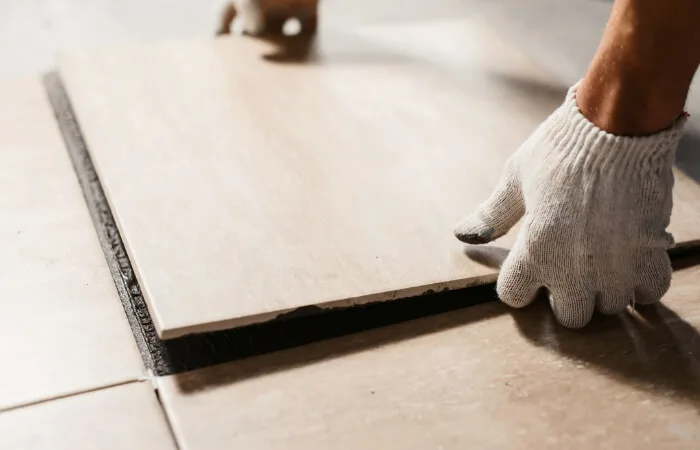
Since tile adhesive requires a long open time, slip resistance, and smooth application. HPMC can increase viscosity and water retention, ensuring an even spread and strong bonding for tile adhesives than CMC.
HPMC for Wall Putty and Skim Coat
Wall putty is one of the biggest markets for construction-grade cellulose ethers. HPMC is better than CMC when it is used on skim coat and wall putty due to its superior water retention, which can help decrease the cracking and ensure even drying.
Cement-Based Plaster / Render Mortar
In cement plaster systems, we also recommend the choice of HPMC since HPMC provides better water retention, reduced cracking and improved adhesion than CMC.
Gypsum Plaster & Gypsum-Based Mortar
CMC and HPMC are both good choices for gypsum systems, and CMC is more compatible with gypsum systems than cement systems. CMC can help you improve surface quality and save cost, while HPMC is also used on high-end gypsum plasters.
Cementitious Waterproofing Mortar / Waterproof Coating
HPMC will be better than CMC in waterproof mortar and coating, as it can help improve the brushability and application, film uniformity and extend open time.
Repair Mortar and Patch Mortar
Repair mortar and patch mortar require high adhesion, strong water retention and sag resistance, HPMC performs better and is more stable than CMC.
At Celotech, you can find various grades of HPMC for your construction material production usage.
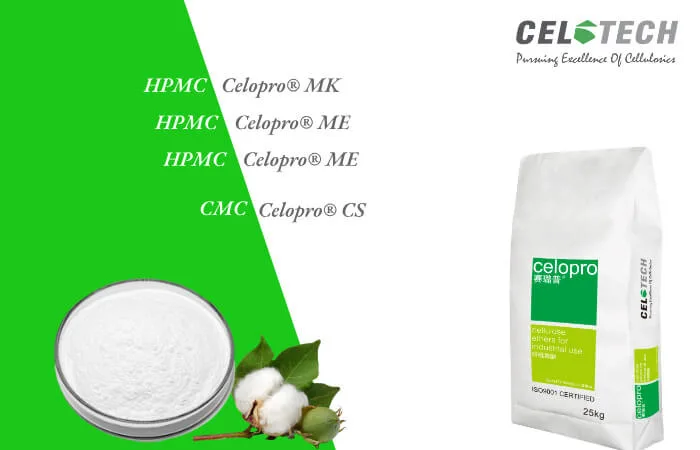
Celopro® MK: super high-performance, gelation temperature 75℃, suitable for demanding or hot-weather applications.
Celopro® ME: more cost-effective HPMC, gelation temperature 60℃, suitable for standard formulations.
CMC in Construction
CMC is suitable for cost-sensitive drymix mortar and plaster or some low requirement wall putty. Its main functions are thickening and stabilizing low to medium-performance systems.
Celopro® CS is s a premium grade of CMC, it can improve the workability and stability of cement-based materials.
Industrial HPMC
In some industrial uses, HPMC is also used as a dispersant and stabilizer. Celopro® VX is designed for PVC production and can help you improve dispersion and system stability effectively.
Other Application Tips
- CMC for Detergent: CMC can be a good thickener and enhance liquid flow, and it is more economical than HPMC.
- CMC for Food: In food applications, CMC is better at thickening and suspending functions.
- CMC in pharma: CMC can save cost as a modification, and HPMC is better on controlled-released and film coating.
Conculsion
HPMC and CMC have differences in properties and performances. The condition of choosing the right one is to see which is suitable for your production or project needs. In summary, HPMC provides high-performance and is more widely used in many applications, while CMC is more cost-effective and suits low requirements and cost control projects.
For premium HPMC and CMC products, contact us for guidance and samples to select the right cellulose ether for your application.
Q1: Can CMC Replace HPMC in Tile Adhesive?
A: HPMC is more widely used in the production of tile adhesives because of its high performance. CMC cannot fully replace HPMC, only for low-demand formulations or when cost is the most important focus.
Q2: Is HPMC Better Than CMC in EIFS?
A: Yes, HPMC is better in EIFS as it needs long open time, excellent adhesion, strong sag resistance and excellent water retention, CMC cannot meet these high needs.
Q3: Which one is Recommended in the Papermaking and Coating?
A: CMC can be enough for regular papermaking and coating production, while if for high-standard paper coating, HPMC can also be suggested.