In modern wall putty(skim coat) formulations or jobsite applications, construction performance is just as critical as final appearance. Applicators expect wall putty to be easy to spread, stable on vertical surfaces, and smooth during finishing. Achieving all these effects balance requires not only proper raw materials, but also the right functional construction wall putty additives.
Starch ether plays a key role in optimizing rheological behavior among all kind additives, even at very low dosage levels.
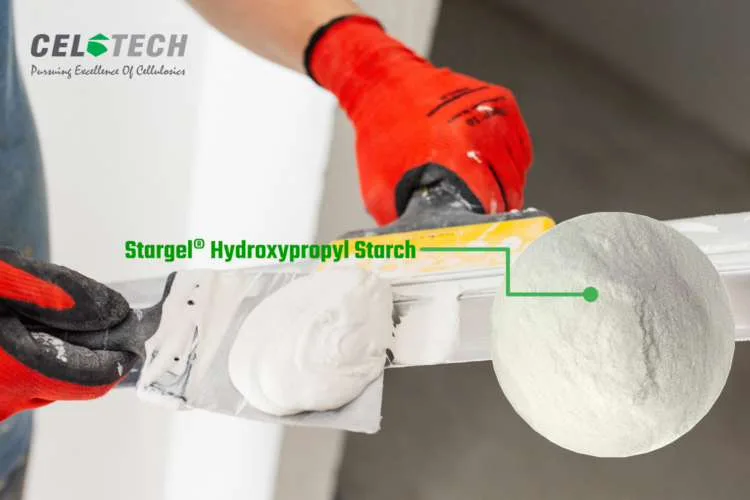
1. Common Challenges in Wall Putty Application
During on-site application, wall putty manufacturers and contractors often face the following issues:
- Putty sags or slides on vertical surfaces.
- Poor knife feel, making spreading difficult.
- Edge collapse during thick application.
- Inconsistent workability under different conditions.
These problems are typically related to insufficient structural stability and poor thixotropic control of the putty system.
- Temperature Sensitivity: In many regions of world, high ambient temperatures can accelerate water loss in wall putty, leading to a “sticky” or “heavy” trowel feel.
- Surface Compatibility: Applying putty over highly restorative or non-absorbent substrates often leads to “slippage,” where the material fails to grip the wall during the initial stroke.
2. What is Starch Ether?
Starch ether is a modified biopolymer derived from natural starch (e.g., from corn or potatoes). it’s engineered to become water-soluble and effective in construction materials through a chemical process, it acts as a multi-functional additive in wall putty, primarily influencing the mixture’s water behavior and consistency.
3. Key Functions of Starch Ether in Wall Putty
3.1 Enhanced Anti-sag Performance
Starch ether helps build a temporary internal network structure within the fresh putty:
Under shear (mixing or troweling): viscosity decreases, allowing easy application.
After shear stops: structure rapidly recovers, preventing sagging and sliding.
3.2 Improved Thixotropy and Knife Feel
With the correct starch ether type and dosage, wall putty shows:
- Smoother spreading
- Better control during leveling
- Reduced edge collapse
3.3 Reduction of Stickiness (Anti-sticking to Tools)
While Cellulose Ethers (HPMC/MHEC) provide necessary viscosity, high dosages can sometimes make the putty feel “sticky” or “stringy” on the spatula. Starch ether modifies this rheology, providing a “shorter” consistency. This ensures that the putty breaks cleanly from the tool, allowing for sharper edges and a more refined finish without the frustration of material pulling back from the wall.
3.4 Synergy with Cellulose Ethers
In most putty systems, starch ether works together with cellulose ethers (such as HPMC or HEMC):
Cellulose ether: Water retention, basic viscosity, open time.
Starch ether: Structural build-up, anti-sag, thixotropic control.
This synergy is not just about performance; it’s about Formulation Optimization. By adding a small percentage of starch ether (0.01% to 0.05%), formulators can often reduce the total amount of expensive Cellulose Ethers required or use a lower viscosity grade to achieve the same—or superior—anti-sag results. This leads to a more balanced cost-to-performance ratio.
4. Application of Stargel® ST300 in Wall Putty
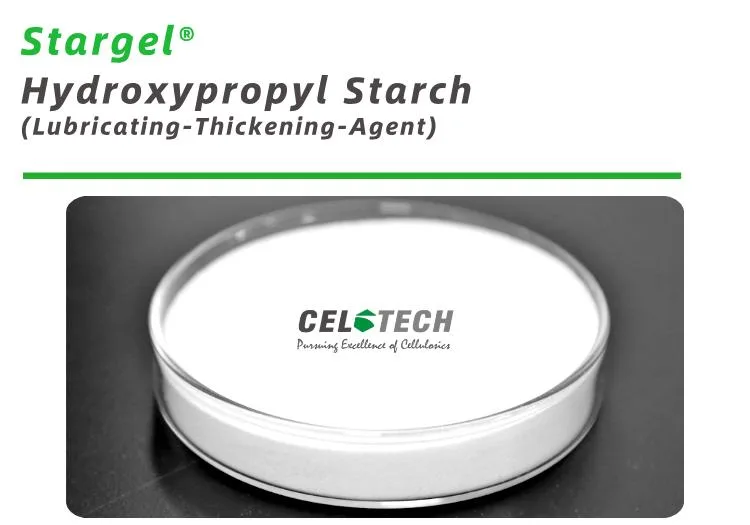
Stargel® ST300 is a high-performance starch ether specifically designed for dry-mix mortar and wall putty systems.
Key Benefits of Stargel® ST300:
- Excellent anti-sag performance.
- Strong thixotropic response.
- Improved application smoothness.
- Effective at very low dosage.
Technical Tips for Formulators:
Dosage Recommendation: For standard wall putty, a dosage of 0.3 – 0.5 kg per ton is typically sufficient to see a significant improvement in thixotropy.
Compatibility: Stargel® ST300 is highly compatible with other common dry-mix ingredients, including Redispersible Polymer Powders (RDP), Calcium Formate, and various mineral fillers like calcium carbonate or talc. It does not negatively impact the final strength or color of the cured putty.
5. Conclusion
Although used in very small quantities, starch ether is an essential additive in modern wall putty systems. By enhancing thixotropy and anti-sag behavior, it significantly improves application performance and construction efficiency.
With its reliable performance and strong rheological control, Stargel® ST300 is a practical solution for manufacturers seeking to optimize wall putty formulations and deliver consistent