The Role of RDP and Cellulose Ether in Tile Adhesive: Performance, Formulation & Application
1. Introduction
Tile adhesives are crucial materials in modern construction, especially for installing ceramic and vitrified tiles on floors and walls. Two key functional additives—Redispersible Polymer Powder (RDP) and Hydroxypropyl Methyl Cellulose (HPMC)—play critical roles in improving performance.
This article explores how RDP and HPMC influence the behavior of tile adhesives, including technical parameters, application methods, and formulation insights.
2. Functions of RDP and HPMC in Tile Adhesives
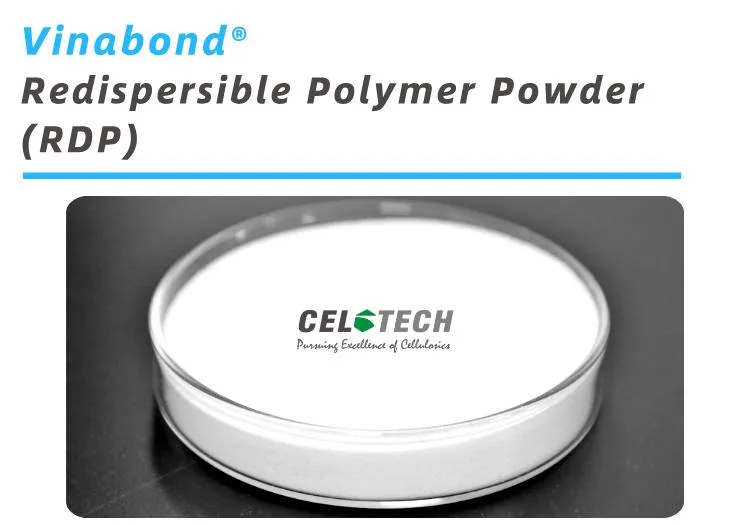
Redispersible Polymer Powder (RDP)
RDP enhances both fresh and hardened mortar performance:
- Improves workability, slipperiness, and cohesion in the wet state.
- Forms a flexible film after drying, improving bonding to dense surfaces and accommodating thermal movement.
- Enhances flexibility, crack resistance, and weather resistance (e.g., water immersion, temperature cycles).
- Common types: vinyl acetate-ethylene (VAE) copolymers, styrene-acrylics.
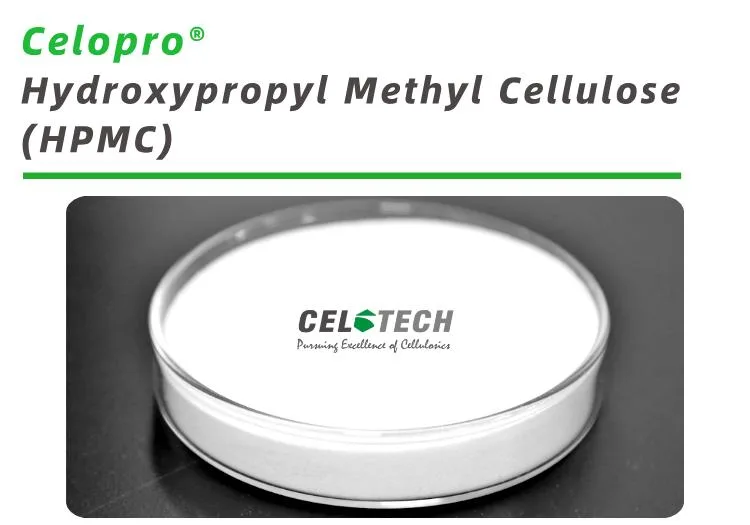
Hydroxypropyl Methyl Cellulose (HPMC)
HPMC improves:
- Water retention, preventing premature water loss due to substrate absorption or evaporation.
- Workability and open time, ensuring smooth tile placement.
- Air entrainment, which lowers bulk density and improves mortar elasticity.
3. Traditional vs. Thin-Bed Tiling Methods
Traditional Method (Thick-Bed)
- Mortar thickness: 10–30 mm.
- Pros: Suitable for uneven substrates.
- Cons: Labor-intensive, inconsistent quality, low efficiency.
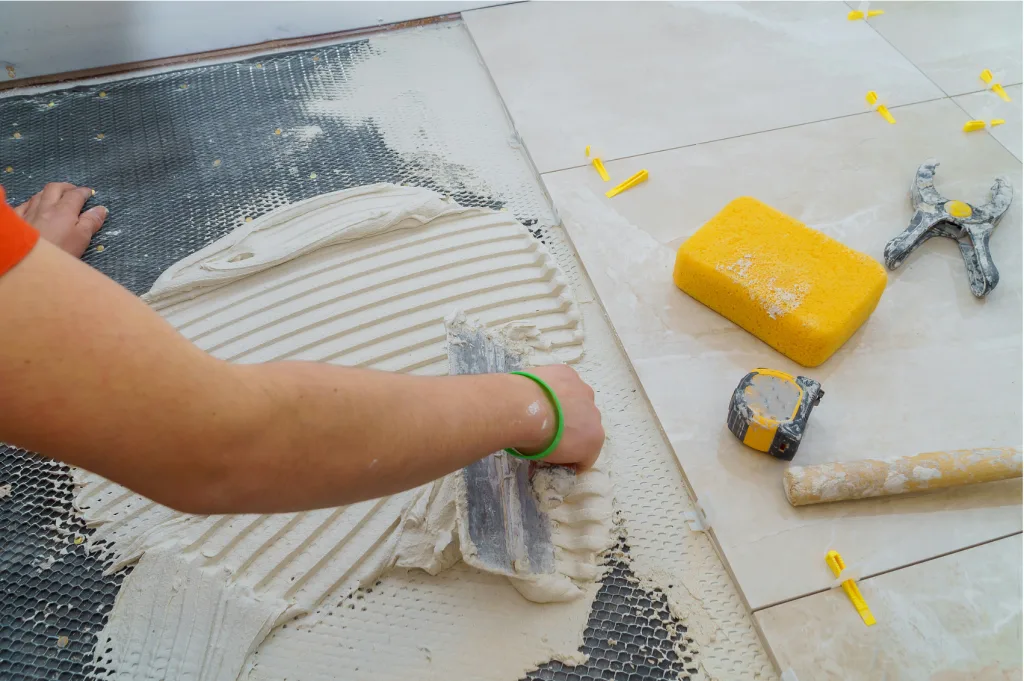
Thin-Bed Method (Modern Method)
- Mortar thickness: 2–4 mm.
- Mortar applied with a notched trowel to ensure uniform coverage.
- Benefits:
- Good adhesion to dense substrates (e.g., vitrified tiles, old tiles, PVC).
- Excellent sag resistance, open time, and crack bridging.
- No pre-soaking of tiles needed.
- Improved construction speed and control.

4. Technical Parameters (Typical Values)
| Property | Typical Value |
|---|---|
| Open Time | ≥ 20 minutes |
| Slip Resistance | ≤ 0.5 mm |
| Tensile Adhesion Strength (28d) | ≥ 1.0 MPa |
| After Water Immersion | ≥ 0.5 MPa |
| After Heat Aging | ≥ 0.5 MPa |
| Flexural Strength | ≥ 2.5 MPa |
| Compressive Strength | ≥ 6.0 MPa |
Note: Actual values may vary based on formulation, curing conditions, and test methods (based on EN 12004 or equivalent).
5. Formulation Recommendations
The proportion of cement in the tile adhesive formulation plays a crucial role in determining the overall performance. According to formulation insights and industry testing practices:
When the cement dosage exceeds 35%, the tile adhesive exhibits significantly improved tensile adhesion strength—especially:
- After water immersion
- After heat aging
This enhancement is attributed to the better hydration reaction and stronger bonding network formed in cement-rich systems, which contributes to both early and long-term strength development. It is therefore recommended that tile adhesive formulations aiming to meet high-performance standards maintain a cement content of at least 35% by weight.
Note: This recommendation is based on practical testing observations and should be fine-tuned depending on the specific type of Redispersible Polymer Powder (RDP) and job site requirements.
6. Typical Application Process
Surface Prep: Ensure surface is clean, level, and dry.
Mixing: Add water to dry mortar mix containing RDP and HPMC. Mix thoroughly until lump-free.
Troweling: Spread adhesive with a notched trowel to create even ridges.
Tile Placement: Press tile firmly and slightly twist into position.
Adjustment: Adjust tile position within open time (typically 20–30 minutes).
Curing: Avoid water contact and heavy loads for 24–48 hours.

7. FAQ: Redispersible Polymer Powder & HPMC in Tile Adhesive
Q1: Can tile adhesive be applied over existing tiles?
A1: Yes, but the old tile surface must be thoroughly cleaned and slightly roughened. Using RDP-modified tile adhesive helps achieve strong adhesion to such non-absorbent surfaces.
Q2: Can tile adhesive be used on PVC substrates?
A2: In general, cement-based adhesives do not bond well to PVC. For such non-mineral, flexible substrates, specialized primers or polyurethane-based adhesives are usually recommended.
Q3: What happens if too much RDP is added?
A3: Excessive RDP can lead to softness and reduced compressive strength. Always follow recommended dosages.
Q4: How does HPMC improve tile adhesive performance?
A4: HPMC ensures adequate water retention for full cement hydration and reduces sagging during vertical applications.
Q5: What is the difference between RDP and latex emulsion?
A5: RDP is a dry powder that redisperse in water, ideal for dry-mix systems; latex emulsion is pre-dispersed in water and requires wet blending.
Q6: Is there an ideal combination ratio of RDP and HPMC?
A6: Typically, 2–4% RDP and 0.2–0.4% HPMC by weight of dry mortar. Adjust based on desired properties and substrate conditions.
8. Conclusion
The synergy between RDP and HPMC enables tile adhesives to meet demanding performance criteria—enhancing workability, adhesion, flexibility, and durability. These additives also support efficient thin-layer construction, reduce waste, and ensure long-term tile bonding in both residential and industrial applications.