
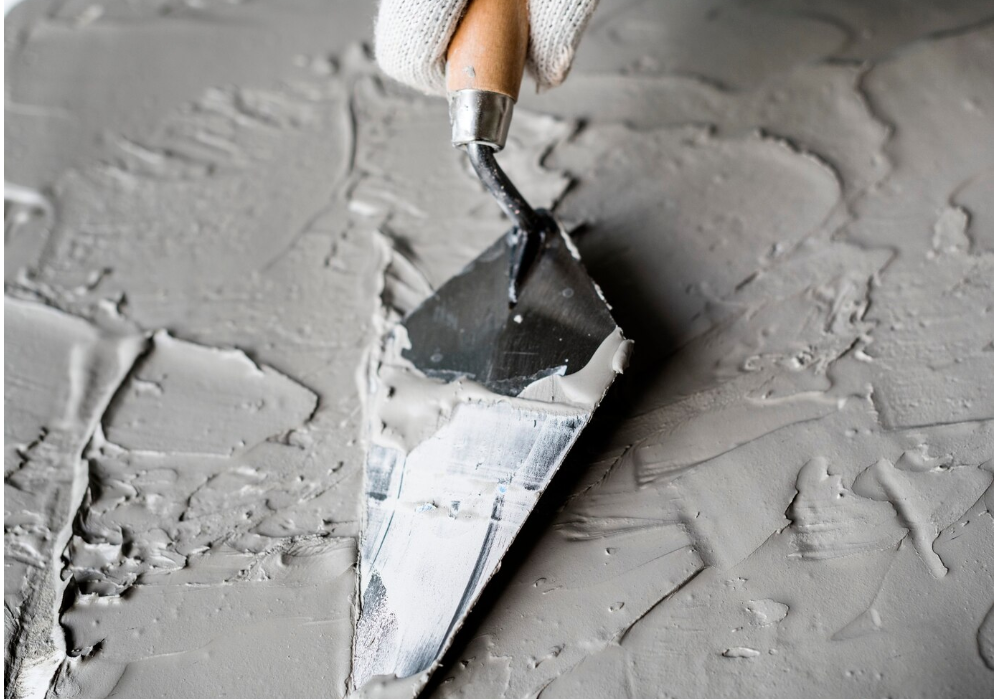
Most mortar is applied onto the surface of buildings, such as plastering mortar, floor mortar, waterproof mortar and decorative mortar, etc. Mortar has a very large contact area with the surrounding environment, so that the moisture in mortar is very easy to lose. In addition, the used site of mortar is not easy for conservation. And mortar is a brittle material, so the most quality problem prone to occur is cracking of mortar, for the main reasons as below.

① Chemical Shrinkage
Most mortar uses cement as a cementitious material. After cement is in contact with water, hydration reaction will occur to form hydration products. The reaction will consume part of water. Since the volume change arising therefrom is related to the hydration products, it is commonly referred to as autogenous volume deformation.
② Drying Shrinkage
Mortar is usually applied onto the surface of buildings, larger in the surface area and thinner in the thickness. Mortar often constitutes a whole together with base course. Most base-course materials have a certain water adsorption capacity. After mortar is in contact with base course, on the one hand, the moisture in mortar will be constantly absorbed by base course; on the other hand, the mortar surface will be in direct contact with the surrounding environment, more sensitive to the changes in the environment, and the moisture on the mortar surface will be evaporated into the atmosphere. The drier the environment is, the faster the moisture evaporation will be, resulting in substantial loss of moisture in mortar, and mortar will produce a greater dry shrinkage deformation because of water loss.
③Temperature Deformation
Temperature deformation depends on the site of mortar applied. The top floor east and west exterior walls of buildings suffer the most temperature stress. The taller the building is, the more temperature stress the exterior wall body of superstructure will suffer. If mortar is applied in the above-mentioned parts, then the temperature stress mortar suffers will be more than that in other parts. If the shear stress or tensile stress between mortar and base course is less than temperature stress, then mortar will either get cracked itself, or get separated from base course in order to release temperature stress, thus producing temperature deformation.
Solutions to Temperature Deformation: firstly, improve the tensile strength of mortar itself and the shear strength between mortar and base course; secondly, avoid complex planes and temperature stress concentration in the design of buildings and structures; finally, adopt exterior protection methods to increase mortar resistance to temperature stress, such as double-layer grid cloth for exterior wall thermal insulation corners.
ABOUT CEMOTECH
→ Suzhou Cemo New Material Technology Co.,Ltd is a high-tech enterprise specialized in construction additives.
→ Estabilished in 2011 and expanded production scale in 2015.
→ Our production capacity is 10,000 tons of redispersible polymer powder, 5000 tons of polycarboxylic acid superplasticizer, 3000 tons of melamine superplasticizer, 2000 tons of defoamer, gypsum retarder, hydrophobic agent and other additives.
ABOUT CELOTECH
→Celotech Chemical is a high-tech enterprise specialized in construction additives.
→ Founded in 2005, then gradually establish branch company and R&D centers, etc. Celotech set up the production site in Shandong, China and headquarted in Suzhou of Jiangsu province, a city very near Shanghai.
→ Our production annual capacity is 40,000 tons of CELOPRO® HPMC , 5,000 tons of Polycarboxylate based Superplasticizer, 3,000 tons of Gypstar® Gypsum Retarder, 15,000 tons of Prestar®Pregelatinized Starch,etc. Celotech is supplying many customers in construction industry all over the world.