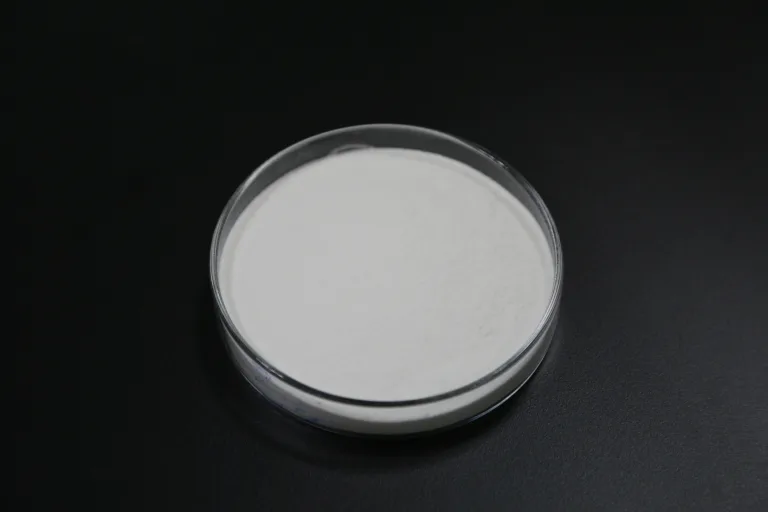
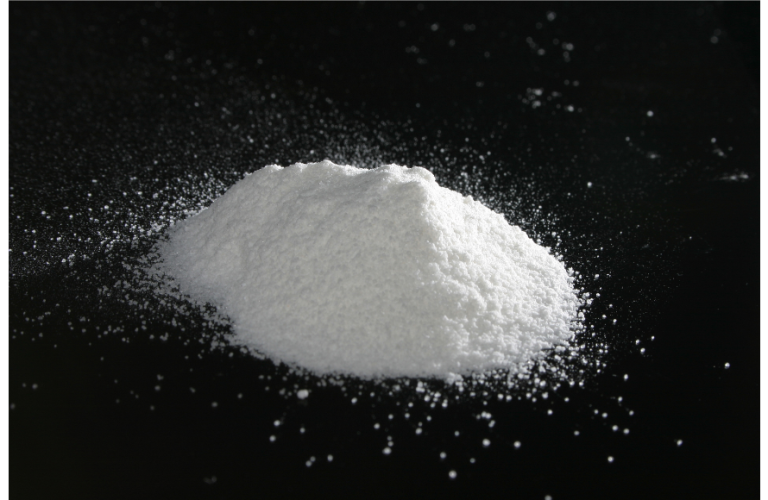
USP/EP Pharmacopoeia Grade HPMC + High Viscosity (3000–5000 mPa·s) + Low Hydroxypropyl Substitution (4.0–7.5%).
| Test Item | Unit | Specification | Standard |
|---|---|---|---|
| Appearance | White to Yellowish white | Visual | |
| Characters | Conforms | EP | |
| Identification A | Conforms | EP/USP | |
| Identification B | Conforms | EP/USP | |
| Identification C | Conforms | EP/USP | |
| Identification D | Conforms | EP | |
| Identification E | Conforms | EP | |
| Identification F | Conforms | EP | |
| pH | 5.5-8.0 | EP/USP | |
| Apparent Viscosity | mPa.s | 3,000-5,000 | EP/USP |
| Appearance of Solution | Conforms | EP | |
| Chlorides | % | Max 0.5 | EP |
| Loss on Drying | % | 5.0 Max | EP/USP |
| Residue on Ignition | % | 1.0/1.5 Max | EP/USP |
| Heavy Metals | % | Not more than 0.001 | EP/USP |
| Arsenic | ppm | 3.0 Max | USP |
| Methoxyl Content | % | 27.0 – 30.0 | USP |
| Hydroxypropoxyl Content | % | 4.0 – 7.5 | USP |
| Total Microbial Count | cfu/g | Max 1000 | |
| Total Mould and Yeast | cfu/g | Max 100 | |
| E.Coli | Negative |
High-viscosity, low-substituted pharmaceutical-grade HPMC forms a controlled-release system characterized by slower release, greater stability, and resistance to disintegration.

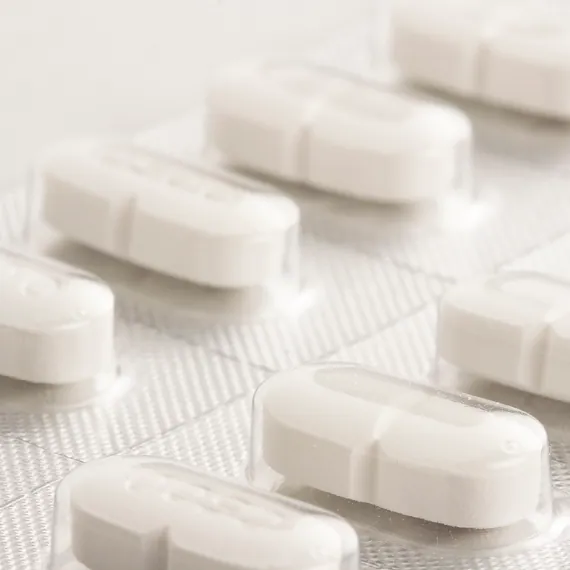
CELOPRE® MF4M can be used to including sustained-release tablets and controlled-release matrix tablets.
Its mechanism of action involves absorbing water and swelling to form a gel layer, thereby controlling the diffusion rate and release profile of the Active Pharmaceutical Ingredient (API) to achieve a steady release of the drug.

CELOPRE® MF4M can be used to tablets with high drug loads, highly soluble APIs (prone to burst release), and applications requiring prolonged release over 12 or 24 hours.
Its key advantage lies in its ability to effectively control the release rate by forming a stable gel layer, thereby preventing drug dumping and achieving a smooth, sustained-release profile.

CELOPRE® MF4M can be used to including hydrophilic gel-matrix tablets, bilayer tablets, and complex controlled-release structures.
Its key advantage lies in its ability to absorb water and form a stable gel-matrix layer, thereby enabling precise control over the drug release rate; it is particularly well-suited for multilayer and irregularly shaped controlled-release designs.
We use cookies to enhance your browsing experience, serve personalised ads or content, and analyse our traffic. By clicking "Accept All", you consent to our use of cookies.
We use cookies to help you navigate efficiently and perform certain functions. You will find detailed information about all cookies under each consent category below.
The cookies that are categorised as "Necessary" are stored on your browser as they are essential for enabling the basic functionalities of the site. Show more
Necessary cookies are required to enable the basic features of this site, such as providing secure log-in or adjusting your consent preferences. These cookies do not store any personally identifiable data.
Functional cookies help perform certain functionalities like sharing the content of the website on social media platforms, collecting feedback, and other third-party features.
Analytical cookies are used to understand how visitors interact with the website. These cookies help provide information on metrics such as the number of visitors, bounce rate, traffic source, etc.
Performance cookies are used to understand and analyse the key performance indexes of the website which helps in delivering a better user experience for the visitors.
Advertisement cookies are used to provide visitors with customised advertisements based on the pages you visited previously and to analyse the effectiveness of the ad campaigns.