Cellulose ethers play an essential role in helping you keep water in mortar mixes. Without good water retention, you may see your mortar lose workability fast, cure unevenly, or become weak. Studies show that as water-cement ratios increase, mortar strength drops quickly.
| Mortar Mix | Water-Cement Ratio Change | Strength Loss (MPa/hour) |
|---|---|---|
| FM-1.7 | 0.485 to 0.715 | 0.43 |
| FM-1.9 | 0.485 to 0.714 | 0.30 |
Keeping water in your mix helps you get smoother, stronger, and longer-lasting results.
Key Takeaways
- Cellulose ethers help mortars keep water better. This makes the mortar stronger and last longer. Using cellulose ethers makes mortar easier to mix and use. It is easier to spread and shape. These additives stop cracks by holding water in the mix longer. This works well even when temperatures change. Mortars with cellulose ethers work the same every time. This helps cut down on waste and saves time on jobs. Picking the right amount of cellulose ether is important. Use between 0.2% and 0.5% for the best strength and stability.
Cellulose Ethers in Mortars

Natural Origin and Production
Cellulose ethers come from natural sources. Manufacturers use refined cotton to get cellulose. This cotton is very pure and works well for making cellulose ethers.
- Refined cotton is the main source of cellulose for making cellulose ethers in mortars.
To make cellulose ethers, producers follow many steps. Here is a simple list:
| Process Step | Description |
|---|---|
| Cellulose Crushing | Breaking cellulose into small pieces |
| Alkalization | Mixing cellulose with an alkaline liquid |
| Etherification | Adding etherifying agents to the cellulose |
| Gas Recovery | Collecting gases made during the process |
| Precipitation | Separating cellulose ethers from the liquid |
| Neutralization | Making the mixture less acidic or basic |
| Washing | Cleaning the product to remove extra stuff |
| Solid-Liquid Separation | Taking out solid cellulose ethers from the liquid |
| Stripping | Removing leftover solvents from the product |
| Filtration | Filtering out any last bits of impurities |
| Drying | Taking out water to make the product dry |
| Crushing | Crushing again to get the right size |
| Mixing | Mixing with other things for the final product |
| Packaging | Packing the product so it can be shipped |
Types of Cellulose Ethers
There are different types of cellulose ethers in mortars. Each type helps the mortar in a special way. The most common types are:
| Cellulose Ether | Solubility in Cold Water | Water Retention | Adhesion to Mortar | Stability to pH |
|---|---|---|---|---|
| MC | Soluble | High | Moderate | Stable (pH 3-12) |
| HPMC | Soluble | Higher than MC | Higher than MC | Stable (pH 2-12) |
| HEC | Soluble | Lower than MC | N/A | Stable to acids/alkalis |
| CMC | N/A | Much lower | N/A | Affected by alkalinity |
| EHEC | Soluble | High | Good | Stable |
HPMC is used a lot in dry-mix mortars. It makes the mortar thick and helps it keep water. HEC helps the mortar stay smooth and stable. CMC controls how thick some products are. EHEC and MC are also important in different mortar mixes.
Multifunctional Roles
Cellulose ethers do more than just keep water in mortar. They have many important jobs:
| Role | Description |
|---|---|
| Thickening Agent | Make mortar thicker and easier to use |
| Stabilization | Stop the mix from separating or leaking water |
| Adhesion Enhancement | Help mortar stick better to surfaces |
| Crack Resistance | Make mortar more flexible so it does not crack easily |
| Freeze-Thaw Resistance | Protect mortar from damage when it freezes and thaws |
Tip: Using mortars with cellulose ethers gives you easier mixing, stronger sticking, and longer-lasting results.
Water Retention Mechanism
Interaction with Water
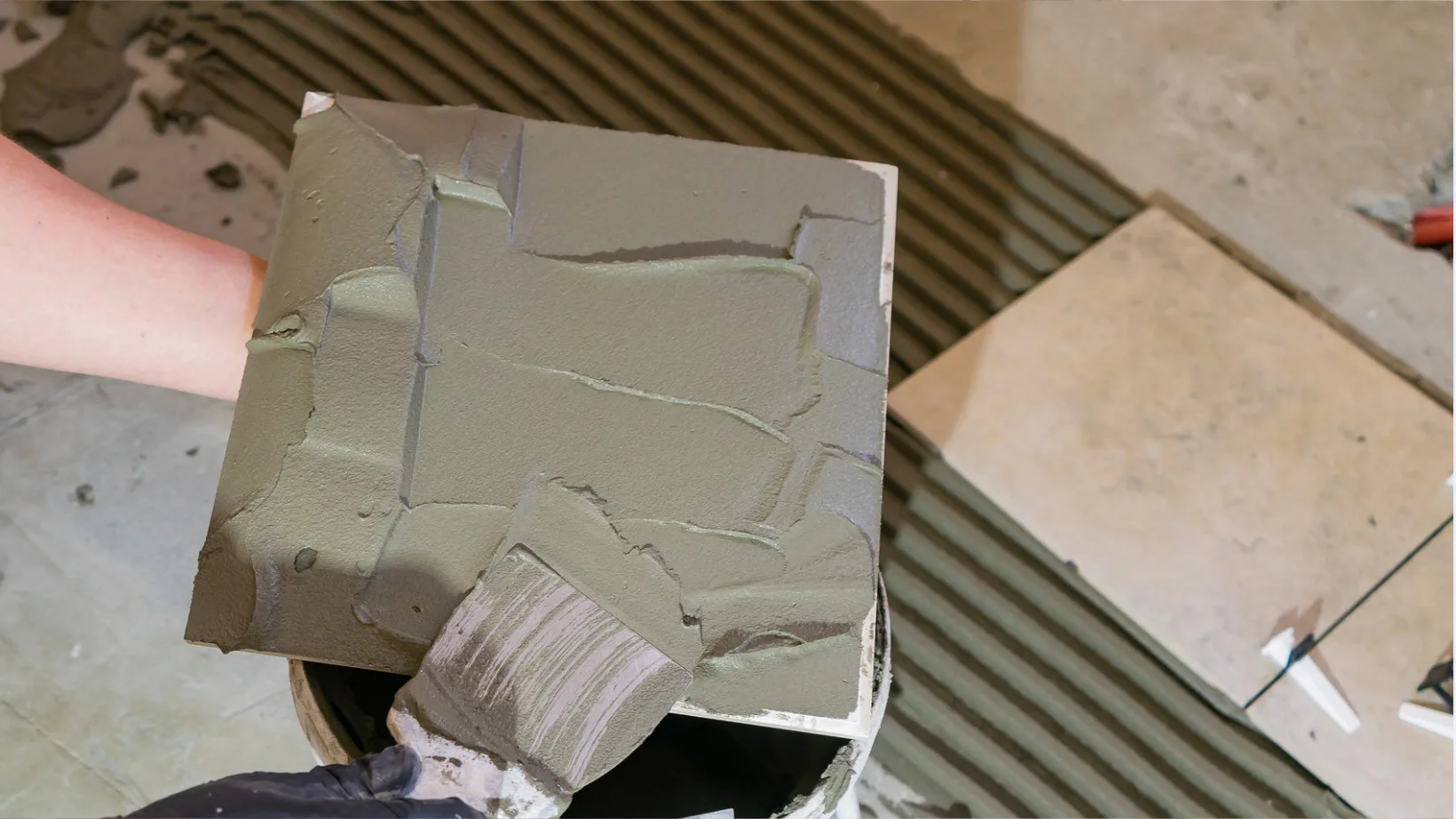
When you mix mortar, water can leave very fast. Cellulose ethers help keep water inside the mix. These ingredients make hydrogen bonds with water molecules. This action changes free water into bound water. Bound water does not escape as quickly. The mortar keeps more water, so cement can hydrate well.
- Cellulose ethers make hydrogen bonds with water.
- Bound water stays in the mortar for a longer time.
- The mix does not dry out fast, even on hot days.
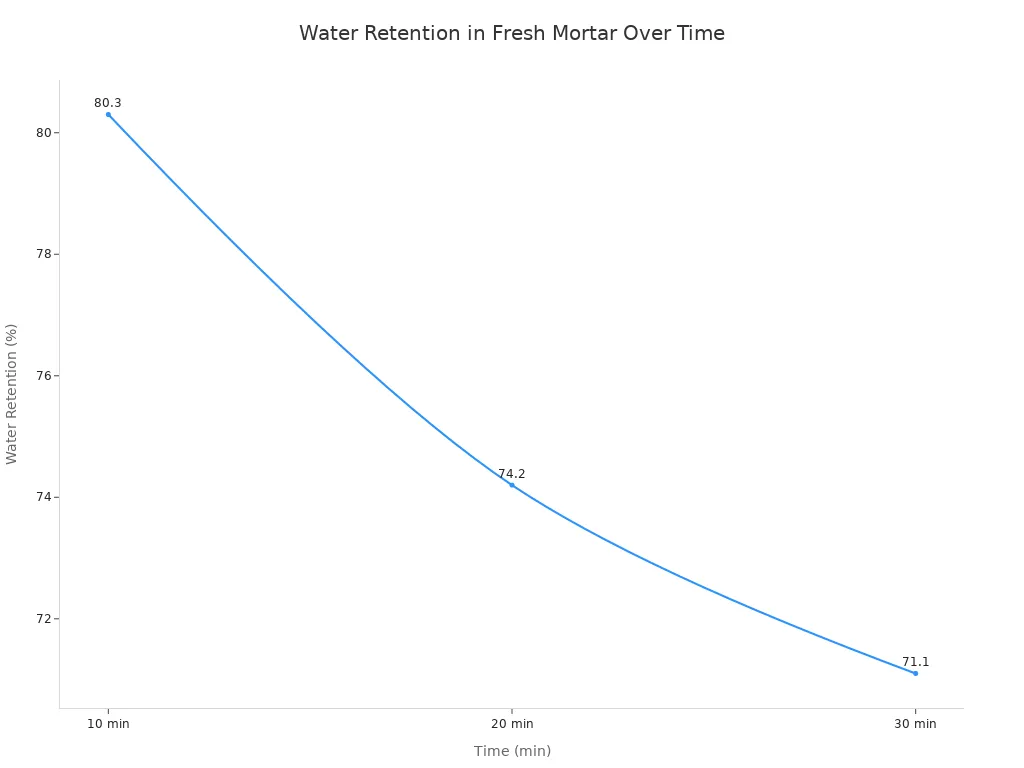
Cellulose ethers also form a thin film on the fresh mortar’s surface. This film slows down how fast water leaves. Water does not escape as quickly. You can see this effect in water retention over time:
| Time (min) | Water Retention (%) | Water Loss (%) |
|---|---|---|
| 10 | 80.3 | 29 |
| 20 | 74.2 | N/A |
| 30 | 71.1 | N/A |
| CE Amount | WRV10: 87.7% to 99.5% | N/A |
| WRV20: 84.9% to 99.4% | N/A | |
| WRV30: 82.4% to 99.2% | N/A |
Note: When water evaporates, cellulose ether builds up on top. This layer protects the water inside, especially in thick mortar beds.
You will also see the mortar gets thicker. Adding more cellulose ether makes the mix smoother and thicker. The molecules dissolve and mix with water over time. The mortar spreads easier and does not separate.
Effect on Mortar Structure
Cellulose ethers do more than hold water. They change how the mortar looks and feels up close. When you add them, the mortar becomes denser and more packed. The hydration process takes longer, so cement sticks together better.
The inside of the mortar gets more even. Big holes get smaller, and pores spread out. This makes the mortar stronger and less likely to crack. The surface stays tough and lasts for years.
| Mechanism | Description |
|---|---|
| Lubricating Film | A smooth film helps you spread mortar evenly. |
| Stable Films | Strong films form around cement particles and make the mortar special. |
| 3D Network | A three-dimensional network slows water flow and keeps it inside. |
| Adsorption | Cellulose ethers stick to sand and cement, so less water is lost. |
| Plastic Viscosity | The mix gets thicker and does not separate. |
| Uniform Distribution | Water spreads out evenly, so there are no dry spots. |
| Durability | Mortar can handle freeze-thaw cycles and stays flexible. |
| Set Times | You get more time to work with the mortar without losing strength. |
Tip: Using cellulose ethers helps your mortar cure slowly and evenly. This gives you better strength and less cracking.
Cellulose ethers really help with water retention and mortar structure. You get a mix that is easy to use, strong, and good for building.
Benefits for Mortar Performance
Improved Workability
When you add cellulose ethers, mortar feels much better to use. These additives help you mix mortar with less effort. The mix spreads smoothly and does not have lumps or dry spots. You can shape the mortar easily and finish your work faster.
- Water stays in the mix longer, so cement gets more time to hydrate.
- The mortar is thicker and smoother, so it is easy to apply.
- The mix flows better, which means it spreads out with less work.
- You do not need as much water to make the mortar workable.
Cellulose ethers help you work even when it is hot or dry outside. The mortar does not dry too quickly, so you have more time to finish. You get a strong, smooth surface that looks nice and lasts a long time.
Tip: If you want to save time and avoid adding extra water, pick mortar with cellulose ethers for easier work.
Enhanced Curing and Strength
Cellulose ethers help mortar cure the right way. They form a thin film around cement particles. This film keeps water in the mix and stops it from leaving too fast. Cement gets enough time to hydrate, which makes the mortar stronger.
Cellulose ethers like HEMC and HPMC make the mortar thicker and more stable. The mix sticks better to surfaces and does not lose water to the air or the wall. This helps the mortar get stronger and last longer.
The type and amount of cellulose ether you use can change the strength. Using higher molecular weight cellulose ethers keeps more water in the mix. This can help make the mortar stronger when it cures. But if you use too much, the mortar can get weaker and more porous. It is important to use the right amount for your job.
Note: Good water retention from cellulose ethers stops the mortar from drying too fast. This helps make the mortar strong and long-lasting.
Reduced Cracking
Cracks can make mortar look bad and weak. Cellulose ethers help stop cracks from forming. They keep water in the mix, so the mortar does not dry out too fast. This lowers the chance of cracks from shrinking or changes in temperature.
Tests show that mortars with cellulose ethers crack less than those without. You will see fewer cracks from drying or heat and cold. These additives also make the mortar tougher and more flexible, so it can handle movement without breaking.
- Cellulose ethers stop water loss and lower the risk of cracks from drying.
- The mortar is better at resisting cracks from heat and cold.
- Adding 0.3-0.5% of HPMC can keep water in the mix over 30% longer, which helps stop cracks.
Callout: If you want your mortar to last and look good, use cellulose ethers to stop cracks and make it stronger.
Performance Examples
Comparative Data
When you look at mortars with and without cellulose ethers, you see a big difference in water retention. Mortars without cellulose ethers have water retention values (WRV) under 86%. If you add cellulose ethers, the WRV goes up to medium (86%–94%) or even high (over 94%). The amount of cellulose ether in the mix matters a lot. Even a little more can make the WRV much higher. Scientists found this change is not random. The numbers show a strong connection between more cellulose ether and better water retention, with p < 0.05.
You also see the mortar acts differently. With cellulose ethers, the mortar flows better and spreads easier. You get more time to work before it sets. The mortar sticks better to things like steel mesh and glass. But you should know these additives can make air bubbles. Too many bubbles can make the mortar weaker if you do not control them.
- The mortar flows better and spreads easier.
- It sticks well to many surfaces.
- You get more time to work on big jobs.
- Be careful with air bubbles, as they can make the mix weaker.
Real-World Applications
Builders and workers say they get many good results when using mortars with cellulose ethers. Here is what you can expect:
| Benefit | Description |
|---|---|
| Extended Working Time | You have more time to use the mortar before it sets. |
| Enhanced Workability | The mix spreads smoothly and shapes easily. |
| Water Retention | The mortar does not dry out too fast, which helps with strength and durability. |
| Improved Adhesion | Tiles, bricks, and plasters stick better to walls and floors. |
| Consistency | You get the same results every time, even on large projects. |
| Cost Efficiency | You waste less material and save on labor, even though the additive is a small part of the mix. |
Tip: If you pick mortars with cellulose ethers, your work gets easier and faster. Your projects will last longer and look better too.
When you keep water in mortar, the quality gets better. The mortar spreads smoother and sticks stronger. It also cracks less often. Studies show these additives make mortar easier to use. You get more time to work before it dries. Your projects last longer and stay strong. Builders and people at home see better results. They also waste less mortar. Today’s mortar uses these new ideas to be strong and last long. It also helps the environment by being more sustainable.
FAQ
What are cellulose ethers made from?
Cellulose ethers come from natural cellulose. Most companies use wood pulp or cotton fibers. They turn these into powders that dissolve in water. These powders help mortar work better.
How much cellulose ether should you add to mortar?
You should add about 0.2% to 0.5% of the dry mix weight. Always read and follow the instructions on the package. Using too much can make mortar sticky or weak.
Can cellulose ethers affect the color of mortar?
Cellulose ethers do not change the color of mortar. They work without being seen. You get better results, but the color stays the same.
Are cellulose ethers safe to use?
Cellulose ethers are safe to handle. They are not toxic and will not hurt your skin. It is still smart to wear gloves and a mask for safety.
Do cellulose ethers work in all weather conditions?
You can use cellulose ethers in hot, cold, or dry weather. They help mortar keep water longer. This means you get good results in many kinds of weather.