
Introduction
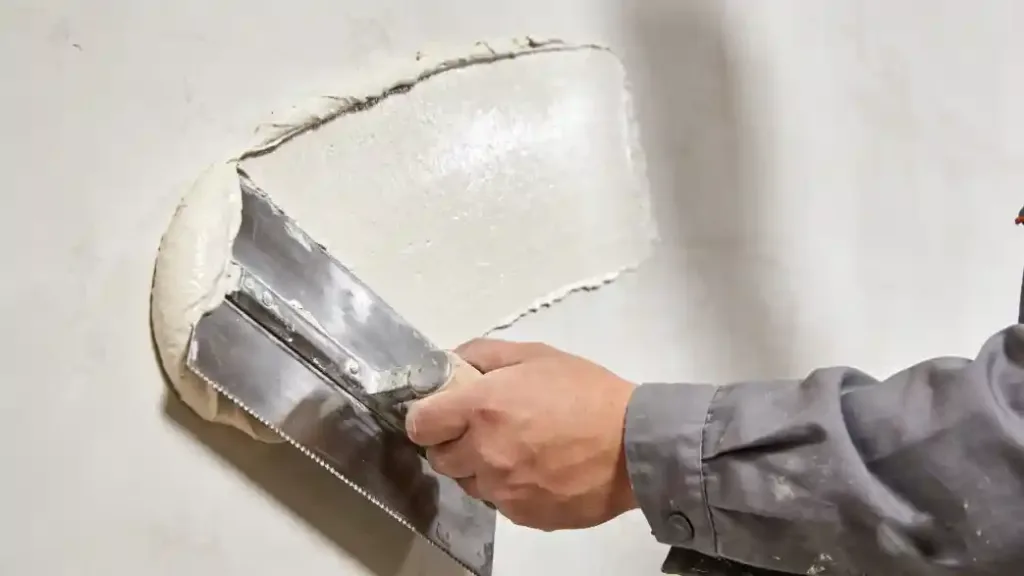
In the application of putty powder, “hand feel” is a core criterion for experienced workers to judge the quality of a product. A so-called “good hand feel” not only concerns the smooth and fluid sensation during the initial application but also manifests in the effortless sanding during the later stage. Behind this seemingly subjective experience lies the scientific crystallization of precisely controlled key functional additives such as pregelatinized starch and starch ether.
Industry Perspective: How “Hand Feel” Is Evaluated in Wall Putty Practice
In real construction and formulation practice, “hand feel” is an empirical evaluation concept formed through long-term field application experience.
It is typically used to describe:
- Tool resistance during spreading
- Paste cohesion and slip behavior
- Stability during application
- Sanding resistance after drying
Application Performance Standard: Smooth Application and Easy Sanding in Wall Putty Systems
For application workers, an ideal putty should possess the following characteristics:
- Initial Touch: The paste should be soft and lubricious, gliding easily without sticking to the trowel and with minimal resistance.
- Application Experience: It should release paste smoothly, resist sagging, be easy to finish, and allow for appropriate single-application thickness.
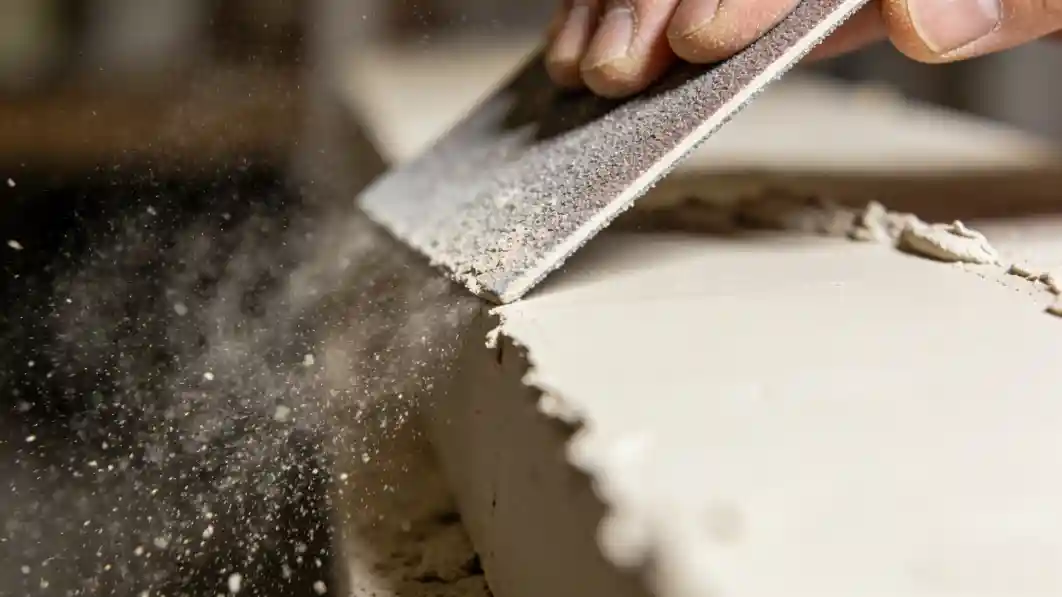
- Sanding Experience: After drying, the strength should develop appropriately—neither too hard nor too powdery—making sanding easy, with less dust and a fine surface finish.
Engineering Perspective:State Behavior of Putty Systems
From a formulation engineering perspective, the three application stages correspond to different material behaviors:
- Wet state → rheology + lubrication behavior
- Application state → cohesion + anti-sag performance
- Dry state → hardness development + microstructure formation
The Role of Starch-Based Materials in Formulation Systems
1. Pregelatinized Starch in Wall Putty Formulation
Pregelatinized starch is a crucial “skeleton” material that imparts initial adhesion, cohesion, and later-stage film-forming strength to putty powder. Its mechanism of action lies in its ability to rapidly swell and gelatinize upon contact with water, providing initial viscosity that effectively coats and bonds filler particles, forming a stable paste structure.
In dry-mix mortar systems such as putty powder, pregelatinized starch is generally regarded as a functional auxiliary structuring additive rather than a primary binder system component.
Its contribution is mainly associated with:
- Early-stage paste build-up
- Improved consistency during mixing
- Interaction with filler particle network
Our Recommended Product: Prestar® 1027
Prestar® 1027 exhibits excellent cold-water solubility and high viscosity, rapidly providing a uniform and stable initial structural strength. Superior balance of film-forming properties and strength development, ensuring the dried putty achieves the perfect strength.
2. Starch Ether as a Rheology Modifier in Putty Powder Systems
Starch ether is a highly effective rheology modifier, primarily functioning to significantly improve the workability and anti-sag properties of putty paste.
Engineering Note: In formulation practice, starch ether performance is strongly dependent on the overall system, including:
- Cellulose ether type
- Filler grading
- Binder composition
- Water retention balance
Our Recommended Product: Stargel® ST300 Starch Ether
- Ultimate Smoothness: Even at very low addition levels (typically 0.03% – 0.1%), it significantly reduces application resistance, creating a noticeable “lubricious” feel that allows the putty to be spread and finished as smoothly as cream.
- Excellent Sag Resistance: Provides strong structural support, preventing the putty from sagging even when applied thickly, ensuring application efficiency and flatness.
- Improved Uniformity: Its superior water retention and suspension properties prevent component separation, resulting in a more stable and uniform paste. This not only enhances the application feel but also lays the foundation for forming a homogeneous hardened layer with consistent strength, leading to more uniform sanding forces.
Additive Synergy in Putty Formulation: Balancing Workability and Sanding Performance
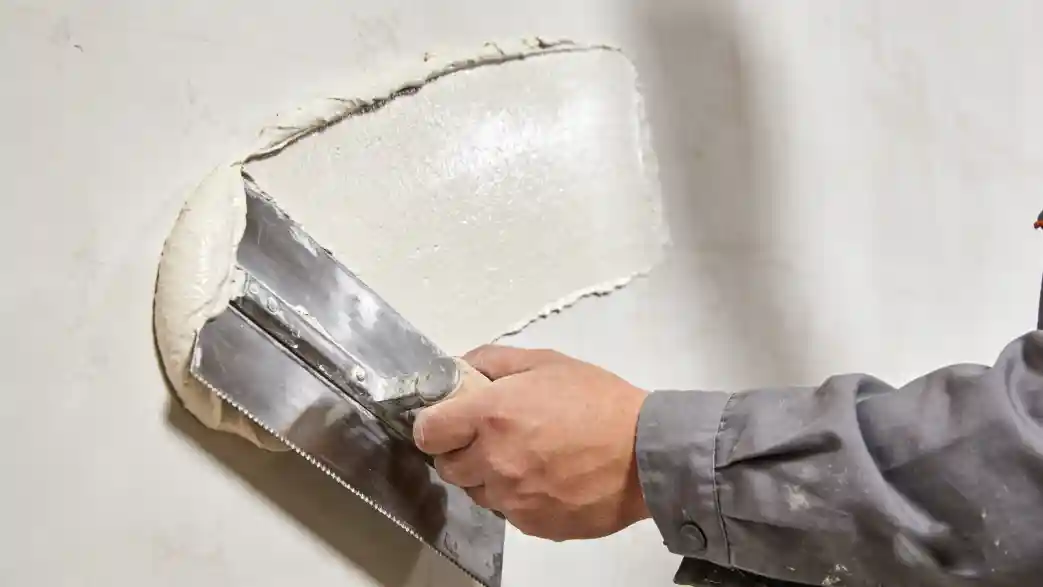
In a high-quality putty formulation, Prestar® 1027 and Stargel® ST300 do not simply add up; they synergize:
Prestar® 1027 builds the appropriately strong and uniform “skeleton,” fundamentally determining the ease or difficulty of sanding.
Stargel® ST300 provides the smooth application experience and helps maintain paste stability, creating favorable conditions for uniform structure formation.
Engineering Constraint: System-Level Factors Affecting Putty Performance
Although synergy is commonly observed in formulation practice, final performance is determined by the combined effect of:
- Filler packing density
- Binder system composition
- Cellulose ether system
- Drying conditions
- Application method
FAQ
1. What is “hand feel” in wall putty?
“Hand feel” refers to the practical application experience of wall putty, including spreading smoothness, application resistance, and sanding performance after drying.
2. What improves wall putty smooth application?
Rheology modifiers such as starch ether and cellulose ether systems are commonly used to adjust slip, cohesion, and workability in formulation systems.
3. What is the role of pregelatinized starch?
It is generally used as a functional additive contributing to paste stability and early-stage viscosity development in dry-mix mortar systems.
4. Why is sanding performance important?
It affects surface finishing quality and construction efficiency, and is related to hardness development and internal structure uniformity.
5. Can additives alone determine performance?
No. Final performance depends on the full formulation system including binder, fillers, cellulose ethers, and environmental conditions.
Technical Closing
We are committed to providing functional additive solutions for dry-mix mortar systems, supporting formulation optimization based on material behavior and construction performance requirements.