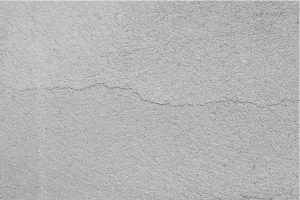
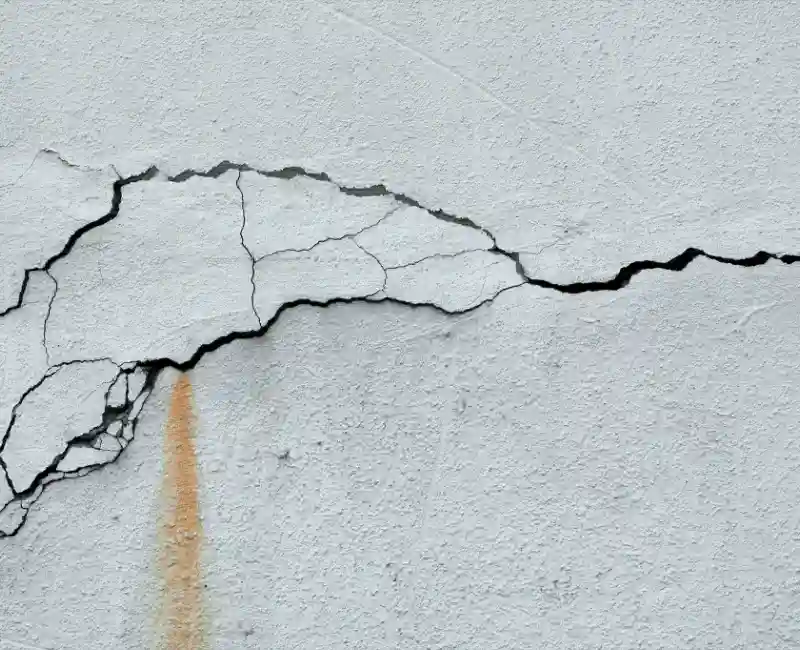



If you are facing issues such as crack re-opening, poor adhesion, or insufficient durability in repair systems, you are in the right place. As a reliable supplier of construction additives, Celotech can help you achieve the best balance of workability, adhesion, durability, and long-term performance in crack-filling mortar.
On this page, we focus on the common challenges in concrete crack filling systems and provide practical formulation support.
For cement crack filler and a part of acrylic crack filler, the following additives can be indispensable.
In concrete crack repair, the additives below are selected based on repair conditions and showcase our system expertise.
For special requirements on your concrete crack filling system, you can selectively use these additives.
| Technical Issue | Root Cause | Additive Solution |
| Shrinkage Cracking | Rapid water loss → high capillary stress → re-cracking after repair | HPMC / MHEC + RDP + Powder Defoamer |
| Interface Failure | Weak bonding + mismatch in thermal/shrinkage movement between old concrete and repair layer | RDP (core) + HPMC/MHEC + Water Repellent Agent |
| Thixotropy vs Flow Conflict | Need low viscosity for filling, but high yield stress to prevent sagging | HPMC/MHEC + Starch Ether / Guar Ether |
| Dynamic Crack Movement | Crack expansion/contraction due to temperature & load cycles → brittle repair failure | RDP + Cellulose Fiber / PP Fiber |
| Additive | Typical Dosage (% by dry mix) | Notes / Function |
| MHEC / HPMC | 0.15–0.40 | Water retention and thixotropy; MHEC preferred for vertical crack repair |
| RDP | 1.0–4.0 | Adhesion and flexibility; core binder in crack repair mortar |
| Cellulose Fiber | 0.05–0.30 | Micro-scale mechanical reinforcement to prevent crack propagation |
| Polypropylene Fiber | 0.03–0.15 | Complementary to cellulose fiber; distributes stress across larger cracks |
| Powder Defoamer | 0.05–0.20 | Eliminates trapped microbubbles, improves density and mechanical strength |
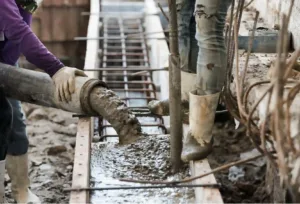
Celotech additives are widely used in a variety of concrete crack repair projects. Typical applications include:
Our carefully selected additive systems ensure optimal adhesion, flexibility, water retention, and crack resistance, helping repair mortars perform reliably under different conditions.

Free samples, on-site formulation guidance, troubleshooting, and customized solutions

Operations and partner networks in Turkey, Europe, Southeast Asia, Africa, and China

VOC-free, REACH, SGS, and ISO certificates
It involves several possibilities, such as shrinkage, substrate movement, or insufficient fiber reinforcement. We can provide you with an effective solution combining RDP with cellulose or PP fibers, proper water retention, and optional anti-shrink agents to prevent re-cracking.
Cellulose fiber is better for micro-crack control, and PP fiber provides stress distribution in larger cracks. In practical applications, you can combine them for optimal crack resistance and durability.
Yes, Guar Ether and MHEC can improve flow under shear while maintaining anti-sag at rest. You can balance their dosage based on crack orientation and vertical vs. horizontal application to ensure optimal workability.
Absolutely, we can not only provide global quality equivalent additives, but also offer technical optimization based on your formulation and application conditions.
We use cookies to enhance your browsing experience, serve personalised ads or content, and analyse our traffic. By clicking "Accept All", you consent to our use of cookies.
We use cookies to help you navigate efficiently and perform certain functions. You will find detailed information about all cookies under each consent category below.
The cookies that are categorised as "Necessary" are stored on your browser as they are essential for enabling the basic functionalities of the site. Show more
Necessary cookies are required to enable the basic features of this site, such as providing secure log-in or adjusting your consent preferences. These cookies do not store any personally identifiable data.
Functional cookies help perform certain functionalities like sharing the content of the website on social media platforms, collecting feedback, and other third-party features.
Analytical cookies are used to understand how visitors interact with the website. These cookies help provide information on metrics such as the number of visitors, bounce rate, traffic source, etc.
Performance cookies are used to understand and analyse the key performance indexes of the website which helps in delivering a better user experience for the visitors.
Advertisement cookies are used to provide visitors with customised advertisements based on the pages you visited previously and to analyse the effectiveness of the ad campaigns.