
Introduction
Concrete is a widely used construction material, but it has poor tensile strength and crack resistance. So in real construction, we will combine reinforcement systems to improve structural stability. Fiber-reinforced concrete and rebar are two common reinforcement methods with strengths and weaknesses. We’ll summarize their differences in functions, applications, and costs, helping you make the right reinforcement strategy.
What is Fiber Reinforced Concrete?
Fiber-reinforced concrete (FRC) is a kind of improved concrete that is mixed with fibers. It is a composite material, the fibers are evenly distributed in the cement matrix. As we know, concrete can cause cracks easily under shrinkage and external stress. Fibers can be a good concrete crack filling, controlling crack initiation and propagation at the micro level.
By bridging these cracks, the fibers can control the width of cracks and improve the toughness of concrete after cracking.
Fiber Reinforced Concrete Types
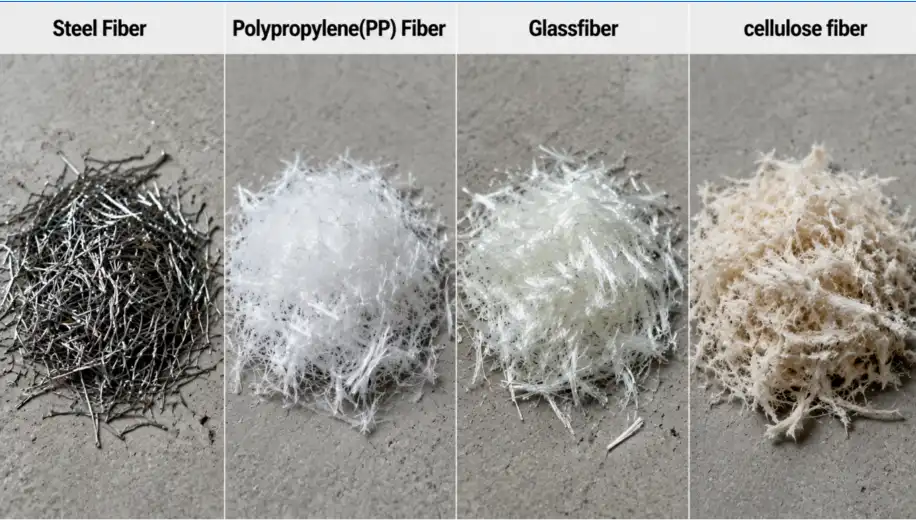
In practical applications, there are different types of fiber-reinforced concrete. According to the types of fiber used in concrete, we can have the following four categories:
- Steel Fiber Reinforced Concrete: With steel fibers inside, the concrete can provide high toughness and impact resistance.
- Synthetic Fiber Reinforced Concrete: Polypropylene(PP) Fiberis the most common fiber type, and mainly controls plastic shrinkage cracks.
- Glass-reinforced fiber concrete: Fiberglass-reinforced concrete offers high tensile strength and is commonly used for precast components and decorative panels
- Natural Fiber Reinforced Concrete: It includes cellulose fiberand other plant fibers reinforced concrete, eco-friendly and improves shrinkage cracking.
What is Rebar?
Rebar refers to the metal bar cast inside the concrete for reinforcement. Concrete is strong in compression, but weak in tension. Europeans and Americans discovered the effectiveness of reinforcing concrete with steel bars in the mid-19th century. Nowadays, rebar primarily acts as a good structural framework for bearing load in construction. Without rebar, the structure of concrete is limited and cannot bear bending, shear, or tensile stresses.
Types of Rebar
By material, we can divide the rebars into:
- Stainless steel rebars
- Carbon steel rebars
- Epoxy-coated rebars.
By specialized applications, there are two kinds:
- Fiber Reinforced Polymer (FRP)
- Fiberglass rebar
In most cases, when we talk about rebar, we just refer to steel rebar. We will compare the fiber-reinforced concrete with the regular steel rebar from different aspects. In the following content, we will simply call it “rebar”.
Fiber Reinforced Concrete vs Rebar
In the reinforcement of concrete, fiber and rebar do not play the same role at all. We will list their differences in the same dimension one by one. Simultaneously, talk about their shortcomings to give you a comprehensive understanding.
Crack Control Behavior
Fiber-reinforced concrete and steel rebar behave very differently in crack control. The working principle of fibers is at the micro level. They can help you reduce plastic shrinkage cracks and drying shrinkage cracks. For thermally induced cracking caused by temperature changes, fibers can also bridge the small crack.
Rebars cannot control these early-stage cracks directly. Their main function is to distribute structural cracks at a larger scale after the concrete has already hardened. This means you may still see surface cracking if the mix design or curing is not well controlled. In practice, fibers improve surface integrity, while rebar manages structural crack distribution.

Strength and Structural Behavior
For load-bearing purposes, rebar is the primary material. It can provide tensile and flexural strength, help resist bending, shear, and long-term static loads.
Due to the properties of fibers, they can not increase structural strength in the same way as rebar. Above talked above, fibers are mainly used for controlling crack width and post-crack performance. You can get better toughness, energy absorption, and resistance to sudden brittle failure. Fibers also improve behavior under dynamic conditions such as impact and vibration.
In real engineering terms, rebar defines strength capacity, while fibers improve material resilience after cracking.
Durability and Degradation
Fiber-reinforced concrete can be a more durable material than rebar. Since fibers are inert, non-corrosive, and evenly dispersed, they are not affected by water, chlorides, or electrochemical reactions. These characters give you stable performance in humid or chemically aggressive environments. Fibers also help absorb thermal movement and reduce micro-crack expansion caused by temperature changes.
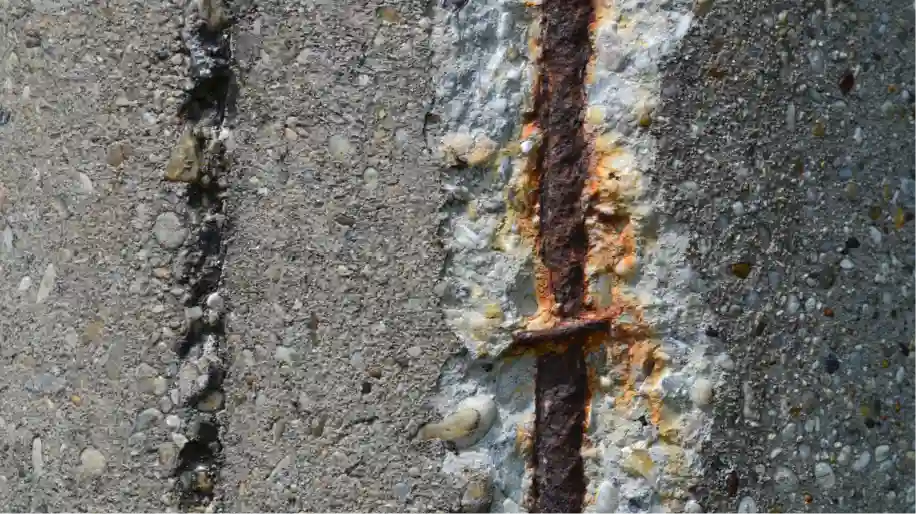
But steel rebar is easy to corrode when exposed to moisture and chlorides. Its strength advantage lies in resisting heavy traffic loads and repeated structural stress. However, it relies heavily on concrete cover for protection against environmental degradation over time.
Construction and Installation
Fiber-reinforced concrete is relatively simple to use in construction. Fibers are directly mixed into the concrete and distributed throughout the matrix during mixing. You can save additional installation steps, help you simplify onsite operation.
If choosing rebar, you need to conduct a much more complex process. Firstly, because of the heavy weight of the rebar, transportation will not be easy. Secondly, you need experienced workers to cut, bend, position, and tie the rebars according to structural drawings before placing concrete. It will increase labor and extend construction time.
Cost and Engineering Efficiency
From the initial material price, fiber-reinforced concrete is more expensive than rebar.
Rebar is more common, and the material cost is relatively lower. But we mentioned the differences in construction and installation, we can find that steel rebar systems cost more in delivery, labor, time, and construction precision. Fiber-reinforced concrete can improve construction efficiency and reduce labor costs.
Fiber-reinforced concrete is more cost-effective overall than rebar. On a real project, you should also make a comprehensive budget analysis based on local market expenses.
Comparison Table
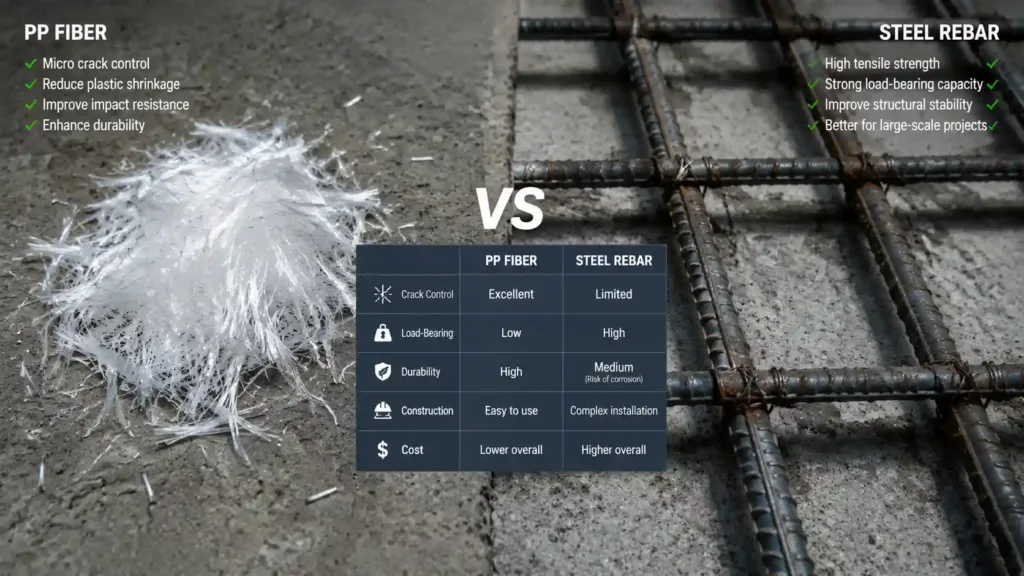
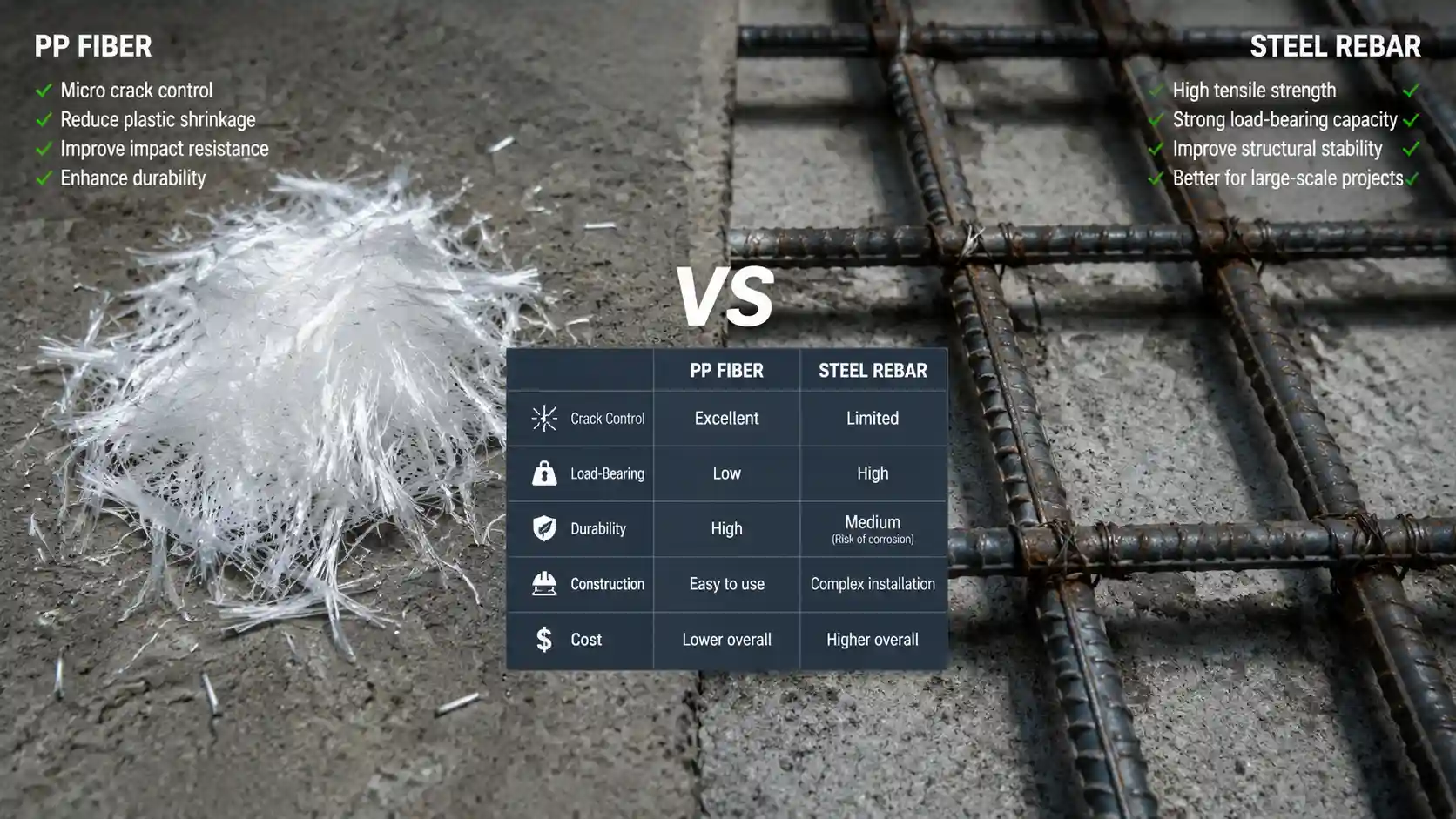
For your quick comparison between fiber-reinforced concrete vs rebar, you can browse the table below:
| Aspect | Fiber Reinforced Concrete | Steel Rebar |
| Crack Control | Controls micro-cracks, shrinkage & thermal cracking | Limited; mainly controls structural crack distribution |
| Strength | Improves toughness & post-crack behavior | Primary tensile & flexural strength |
| Impact / Fatigue | Good energy absorption, better dynamic response | Strong under static load, limited crack toughness |
| Durability | Non-corrosive, stable in moisture & chemicals | Prone to corrosion if exposed via cracks |
| Construction | Easy mixing, no placement work | Needs cutting, bending, tying, and skilled labor |
| Installation Time | Fast | Slow |
| Cost (system level) | Lower labor, higher material in some cases | Lower material, higher labor & time cost |
| Performance Focus | Crack control + durability + toughness | Structural capacity + load-bearing |
From the above comparison, you can find that fiber-reinforced concrete and rebar have their own advantages and disadvantages.
In a word, fiber-reinforced concrete focuses on crack, but cannot provide primary structural strength. Rebar has a strong bearing capacity but has minimal help with cracking issues. In real applications, they also have distinctions in durability, installation, and cost. We will share some application guidelines in the following section.
How to Choose the Right Reinforcement Method
After understanding the distinctions of fiber and rebar in concrete, you can know their application focuses. In real projects, to choose the right reinforcement method, you can follow the points below:
When to Choose Fiber-Reinforced Concrete, If you only need good surface performance, you can rely mainly on fiber-reinforced concrete. Typical cases such as:
- Slabs
- Pavements
- Industrial Floors
- Thin Concrete Layers
In these situations, your main concern is shrinkage cracking, surface durability, and construction efficiency. Fibers help you reduce early-age cracking and improve toughness.
However, you should not use fiber alone where structural loads or bending forces are of most importance.
When to Choose Rebar
If the application scenarios need to carry significant loads, you have to choose rebar. Steel rebar is of necessarily for building, including:
- Beams
- Columns
- Foundations
- Retaining Structures
Any Other Load-Bearing Framework
In these cases, you must use rebar to ensure the safety of the structure, especially under long-term static and dynamic loads.
When to Combine Both Reinforcement Systems
In many real construction job sites, people combine fiber and rebar for the best performance and service life.
You should consider a hybrid system when:
You need to crack resistance and the crack-post control
You also need to ensure surface durability
The application involves to heavy traffic or vibration
Typical examples include industrial floors, tunnels, precast elements, and repair systems.
Are Fiber Reinforced Concrete and Rebar Interchangeable?
After reading the above explanations, you will clearly know that reinforced and rebar are not interchangeable when used in concrete. To make it short, they function like:
- Fiber = material-level crack control
- Rebar = structural load system
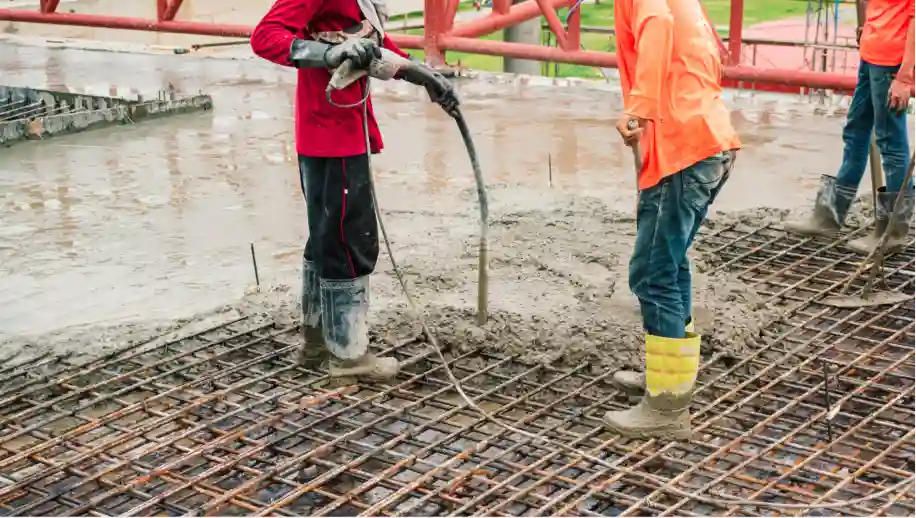
In practical application, you can replace part of the rebar with fiber reinforced concrete, that is actually the mixing usage of them, which we have talked about in the previous paragraph.
Material Optimization
In practical concrete design, workability and performance can be further improved through mix optimization systems. For instance, HPMC and MHEC can help stabilize water retention and fiber dispersion.
These materials reinforce the concrete directly, but they can help the system perform more reliably in real construction conditions.
Final Thoughts
Fiber reinforced concrete and steel rebar are complementary reinforcement systems rather than competing solutions. When combined with optimized material systems, including cellulose ethers, polymer powders like RDP, and superplasticizer provided by Celotech, you achieve improved crack control, durability, and construction efficiency in modern concrete applications.
FAQ
Why Do Cracks Still Appear Even With Fiber Reinforcement?
Fiber in concrete can control the crack width, but cannot remove crack. To be more correct, fiber cannot prevent concrete cracks from forming, but it can control how cracks develop and grow.
Will Steel Rebar Corrode If the Concrete is Well Covered?
Yes, possibly. Steel rebars will be corrosive if there are crack occurred in reinforcement layer, or high penetrate chloride.
Does Fiber Affect Concrete Workability?
Yes, if the fibers are not dispersed evenly, or improper dosaged, they may increase the viscosity, reduce flow and cause pumping blockage.
What Happens If Fiber Distribution Is Not Uniform?
If the fibers are distributed not uniformly, they can create weak zones, reduce crack control efficiency, and cause inconsistent surface performance.
Does Fiber Reinforced Concrete Improve Freeze-Thaw Resistance?
Yes, from final result, we can say fiber used in concrete can improve feeze-thaw resistance. By reducing micro-cracks, fibers can control the moisture inside the concrete, reducing freeze-thaw damage.