In formulation work, CMC and xanthan gum are often mentioned and compared simultaneously. They are both water-soluble polymers, but in real systems their behavior are different dramatically.
From my over 10 years working with mortars, adhesives, and industrial thickeners, here’s what we’ve learned on the bench and on-site:
- CMC is sufficient when you need cost-effective, controllable viscosity.
- Xanthan Gum is critical when shear stability, salt tolerance, or anti-sag is required.
- In most real formulations, a blend of both gives the most balanced performance—but the dosage matters.
Quick Comparison
| Property | CMC (Carboxymethyl Cellulose) | Xanthan Gum |
| Source | Cellulose derivative | Fermentation polysaccharide |
| Thickening ability | Moderate, controllable | Very high efficiency |
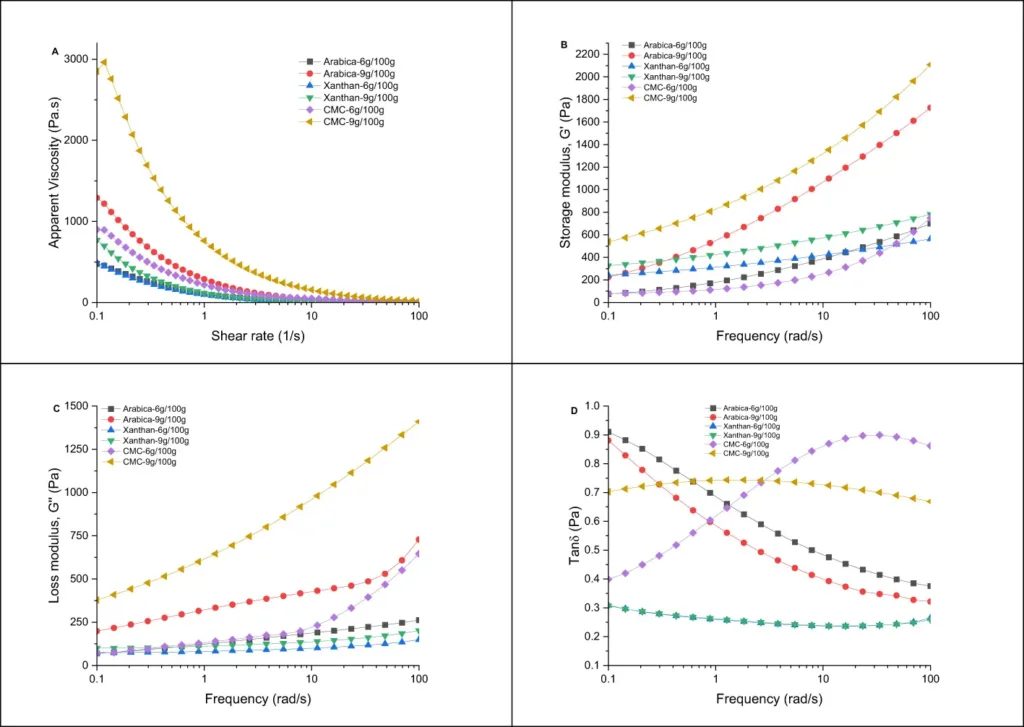
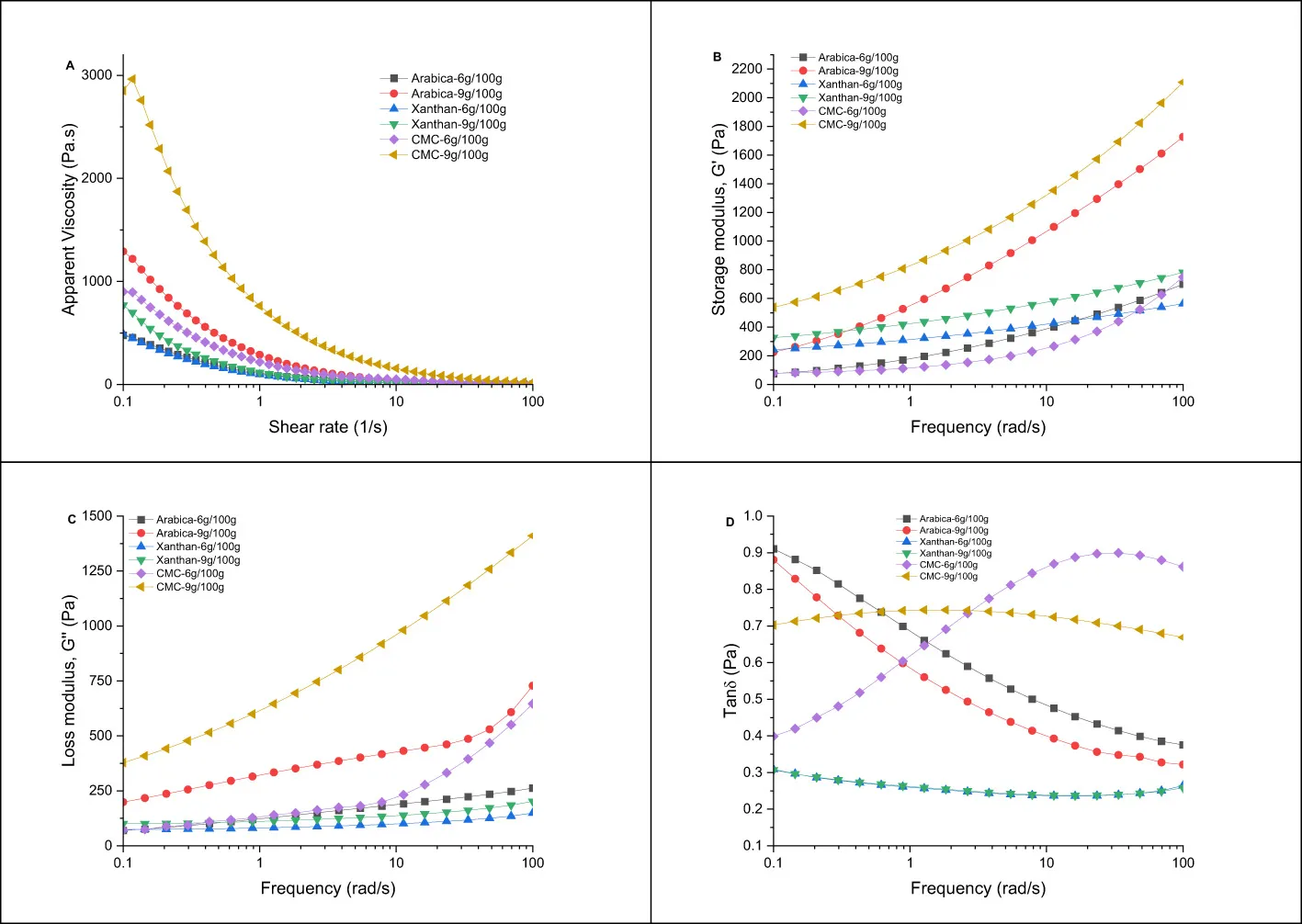
| Rheology | Slight pseudoplastic | Strong pseudoplastic |
| Shear resistance | Limited | Excellent |
| Salt tolerance | Weak | Strong |
| pH stability | Moderate | Wide range (approx. 2–12) |
| Cost | Lower | Higher |
Experience note: Even though xanthan gum is more expensive per kg, adding just 5–10% of the total thickener as xanthan often improves performance more than doubling CMC.
Thickening Mechanism
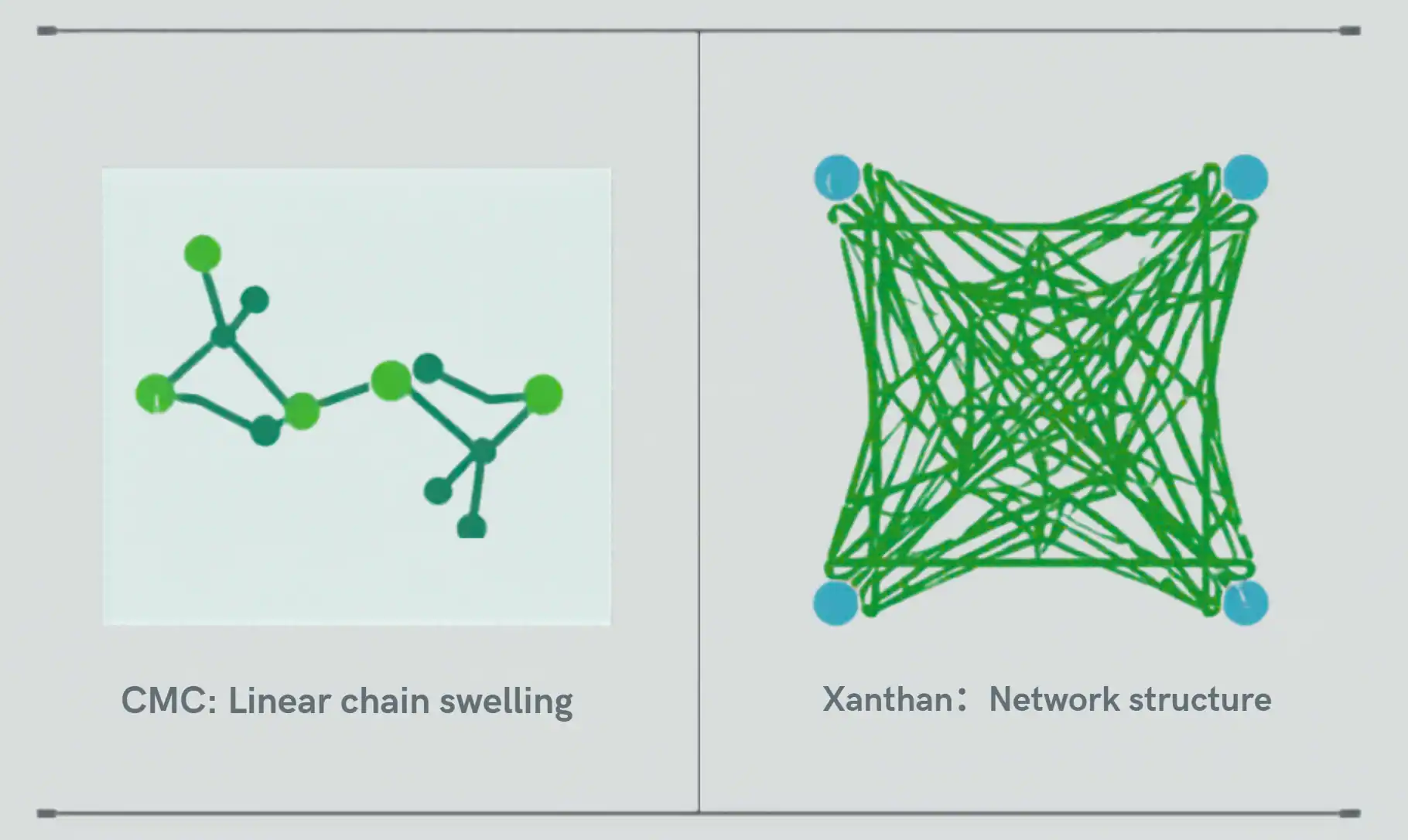
CMC is a linear polymer that thickens mainly by chain expansion. Its response is predictable, so viscosity adjustment is straightforward.
Xanthan gum forms a network structure. High viscosity at rest drops under shear—mixing or pumping temporarily thins it.
Bench insight: In a tile adhesive batch, adding too much xanthan made the mix sticky and hard to trowel in my bad experience. but you still can try it by yourself. i solve the issue by adjusting with CMC for base viscosity at last.
Rheology Behavior
- CMC: near-Newtonian or weakly pseudoplastic → smooth and predictable flow
- Xanthan Gum: strongly pseudoplastic → supports anti-sag, flows under shear
Decision tip: I usually use CMC for basic thickening. but if anti-sag or workability adjustment is required, i will add xanthan later because too much xanthan without base CMC often causes tackiness problems.
Stability in Different Systems
CMC limitations:
- Salt-sensitive
- Loses viscosity in acidic systems
- Electrolytes reduce thickening efficiency
Xanthan advantages:
- Stable in high-salt and wide pH systems
- Performs reliably in multi-component formulations
Practical note: In drymix mortars with fillers and cement, small xanthan additions prevent slump increase that CMC alone cannot control.
Cost vs Performance
- CMC: cost-effective, reliable, easy to handle
- Xanthan: expensive per kg but highly efficient
Rule of thumb from the lab: A blending usage often delivers better performance at controlled cost than relying on one material alone.
Application Comparison
Food Systems
CMC: smooth beverages, ice cream, moderate stabilization
Xanthan Gum: sauces, dressings, suspension stability
Pro tip: For coatings or products that must cling, xanthan is necessary. For smooth flow or pumping, CMC works fine.
Construction and Drymix Mortar
CMC: base thickening, water retention, cost-efficient
Xanthan: anti-sag, improved workability
On-site insight: We tried pure xanthan in one adhesive trial—mix was sticky and hard to spread. but using CMC as base and a small xanthan addition fixed workability without losing anti-sag.
Industrial Applications
- High-salinity or high-shear environments: xanthan preferred
- Moderate systems: CMC suffices, but xanthan prevents shear degradation
How to Choose
- Budget sensitive → CMC first
- High stability required → add xanthan
- Anti-sag or structure → xanthan is key
- Standard drymix → CMC alone is often enough
Engineer’s note: Real formulations almost always benefit from blending CMC and xanthan, and you need small-scale trials to finalize ratios.
Formulation Notes
- Disperse xanthan carefully to avoid clumping.
- Expect shear-thinning behavior; design processing accordingly.
- Blending ratios must be validated experimentally.
Example: In a mortar batch, from our lab testing and on-site experience, replacing 10% of CMC with xanthan can improve sag resistance and workability without extra cost.
Interactive Selection Table & Dosage Guide
| Application | Desired Performance | Recommended Dosage (w/w%) | Practical Notes |
| Tile adhesive (base viscosity) | Smooth handling | CMC 0.3–0.5 | CMC alone is usually sufficient |
| Tile adhesive (anti-sag) | Improved slump control | CMC 0.2–0.3 + Xanthan 0.05–0.1 | Small xanthan addition prevents stickiness if base CMC is used |
| Sauce / dressing | Smooth flow | CMC 0.1–0.3 | Easy pumping, moderate stability |
| Sauce / dressing | Particle suspension | Xanthan 0.05–0.2 | Prevents phase separation |
| Industrial coatings | Shear-stable thickening | Xanthan 0.05–0.15 | CMC may degrade under high shear or electrolytes |
| Complex cementitious | Balanced performance | CMC 0.2 + Xanthan 0.05 | Always validate in small trial batches |
Tips from the lab:
- Adjust dosage in small increments; 0.05% changes can significantly affect rheology.
- Blend ratios depend on the specific grade and supplier.
- Always test under real application conditions.
FAQ
❓Can CMC replace xanthan gum?
Only in simple systems CMC can replace xanthan totally, but for complex, high-salt, or acidic environments xanthan is necessary.
❓Which one gives higher viscosity?
Xanthan thickens more efficiently, especially at low concentrations.
❓Is xanthan more stable than CMC?
Yes, especially under acidic or electrolyte-rich conditions.
Final Note
There is rarely a single “better” material.
Formulation decisions depend on the system requirements and performance targets.
- CMC: reliable, economical, easy to handle
- Xanthan Gum: structure, anti-sag, stability
- Blend: often the most practical solution
For formulation support, sample evaluation, or trial guidance, contact our technical team for personalized advice.
Some Data Source: https://www.frontiersin.org/journals/nutrition/articles/10.3389/fnut.2025.1668661/full