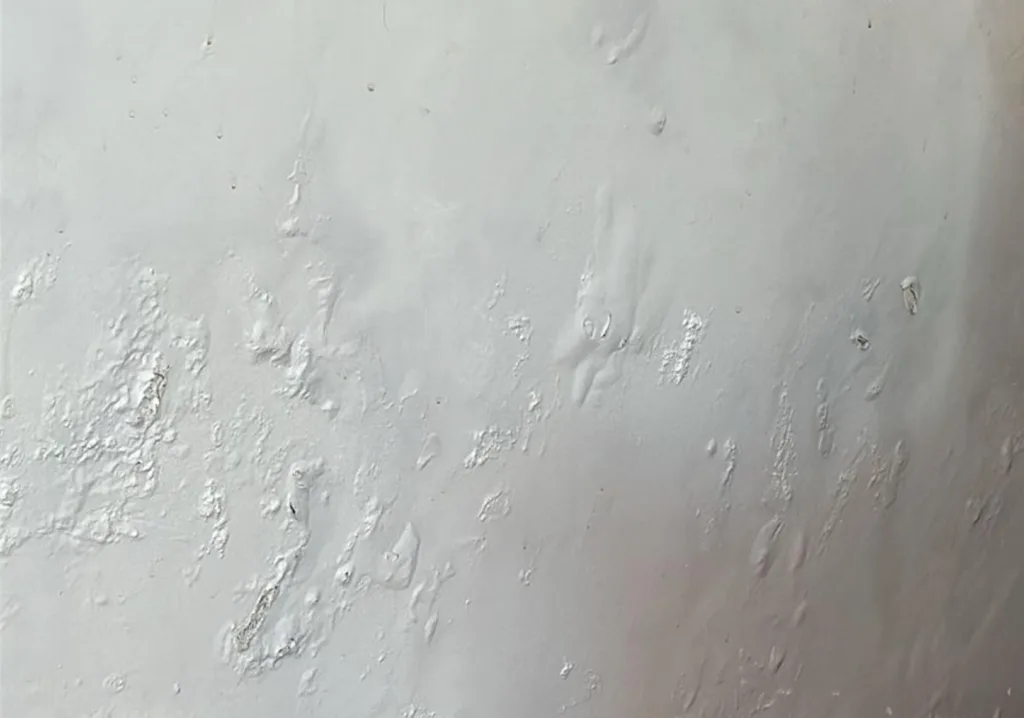
The Science Behind the Wall Bubbles
Wall putty and coatings are widely used in the construction industry as core wall decoration materials, while wall bubbling has become a prominent quality hazard. When facing this problem, many customers hold a one-sided view of preferring alkali depressant, ignoring the root cause of high environmental humidity. Today we will focuse on analyzing the impact of high humidity on wall bubbling, and focuses on promoting our high-performance hydrophobic additives to guide customers to solve the problem from the source.
The Reason Causes Wall Bubbling
- High Humidity Environment is the primary external factor, Through long-term technical practice, we found that high environmental humidity is the main trigger of wall bubbling. Moisture penetrates into the putty/coating layer, accumulates and forms water vapor due to poor water resistance of conventional additives, and the expanded water vapor pushes the coating to form bubbles. This type of bubbling is common in basements, first-floor walls and rainy areas. For this, the key solution is to improve the hydrophobicity and water resistance of the system, rather than simply adding alkali depressant.
- However, there is another root reason of poor water retention of the coating or wall putty. When a mortar lacks high-quality HPMC, it fails to maintain the necessary internal hydration balance under humid conditions. This kind of imbalance leads to compromised adhesion at the substrate interface, eventually showing as uneven blisters once the temperature shifts. It is common problems in construction fields.
- The proper workmanship is the another key factor: Plastering technique is also a critical point should be mentioned. If the plaster or coatings material is applied too thickly in a single pass first, it creates larger internal pores and leads to rapid bubbling shortly after application, resulting in an uneven surface and poor visual finishing. The right plastering technique is applying the plaster in multiple thin layers with firm pressure significantly improves the results and helps prevent future issues such as bubbling and delamination.
How to Solve the Existing Blisters or Bubbling
- To address paint bubbling on walls and surfaces, it is important to find the causereasons, such as moisture, a dirty surface, or overmixing of paint.
- After identifying the cause, the next steps involve preparing the surface by removing bubbled paint, smoothing with sandpaper, cleaning off dust, and patching any holes.
- Following surface preparation, applying a suitable primer is necessary before repainting with care to avoid creating new bubbles.
- For putty or plaster, incorporating additives like HPMC and RDP can help prevent future problems and promote even drying.
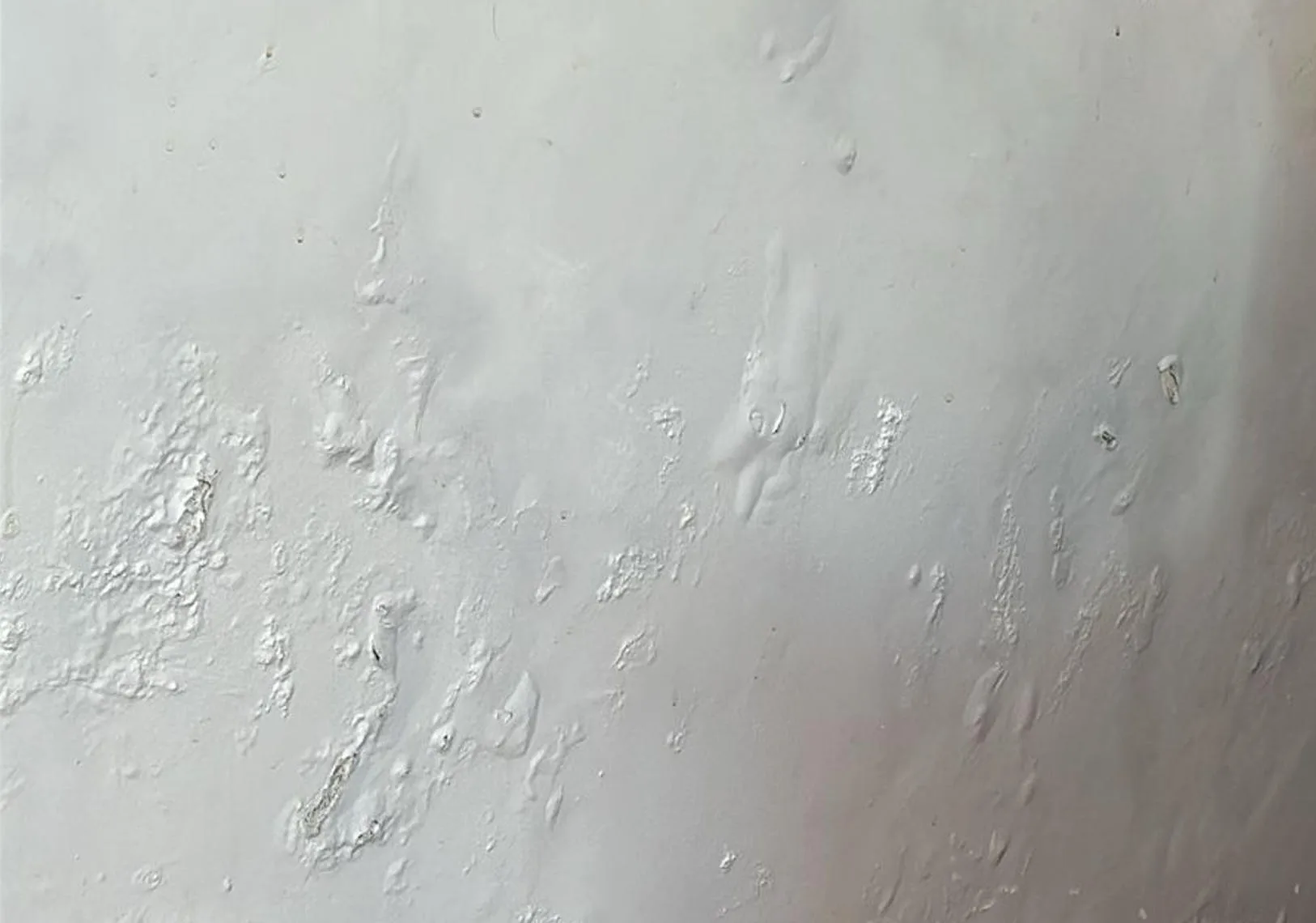
How Does HPMC Minimize Bubbling
Normally, To solve humidity-induced wall bubbling, you also can use cement or plastering with HPMC which is high-quality additive solutions with mature application effects, it can effectively improve the water resistance of the system and eliminate bubbling from the root and in the very beginning.
The Working Principle of HPMC for Reducing the Bubbles
Although HPMC possesses some surface activity inherently which can lead to air entrainment if agitated too aggressively, Celotech HPMC can act as a critical safeguard against post-application bubbling through the following mechanisms:
- Superior Water Retention: When the wall putty or plastering water retention is poor, the dry substrate (such as a brick wall) will siphon moisture from the mortar rapidly. This progress will create micro-voids at the interface. As environment humidity fluctuates later on, the air trapped in these voids will expand and force the film to lift and blister. HPMC can ensure uniform moisture retention, allow the cement or plaster to bond substrate completely and eliminating the underlying bubbles appear.
- Optimized Consistency & Workmanship: HPMC imparts excellent thixotropy to the slurry, ensuring smooth plastering and coating. This allows construction workers to use minimal effort to press the slurry into the pores of the substrate, expelling physically entrapped air generated during the construction process effectively.
- Film Integrity: It ensures thorough hydration of cement/gypsum, forming a dense and resilient base layer that prevents gas from permeating upward from the substrate.
How Does Defoamer Reduce Bubble
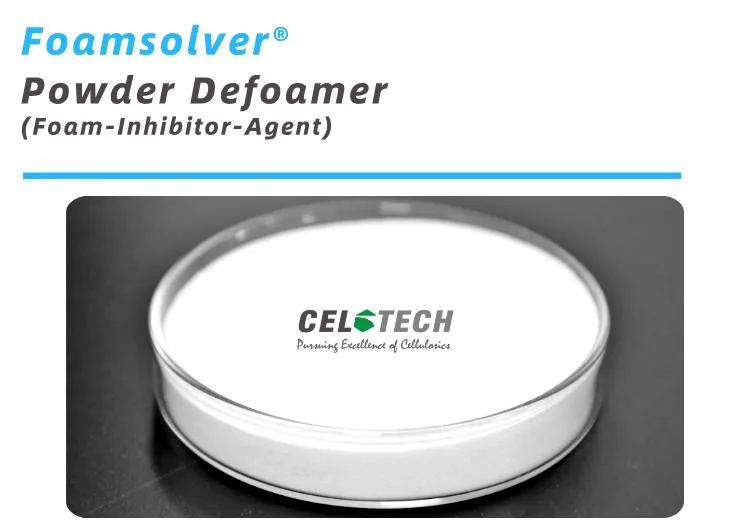
The deformer is also another choice you can use to reduce the bubbling when you make the formulations of plasters or wall putty. If HPMC can be described as performing “macro-level prevention,” then defoamers act as “microscopic demolition experts.”
- Reducing Surface Tension: During mechanical mixing, a large number of tiny bubbles inevitably forming within the slurry. The active components in defoamers penetrate the liquid film of these bubbles, and destabilizing them.
- Bubble Coalescence and Rupture: Defoamers promote the rapid merging of small bubbles into larger ones, which then rise to the surface and burst. The defoamer powder will work seconds after water is added, it will control air entrainment effectively at an extremely low level.
- Preventing “Fisheyes” and Pinholes: Defoamers prevent pinholes left behind by bursting bubbles during the drying process. This ensures the paint film is as smooth as a mirror, thereby preventing moisture from seeping through the pinholes and causing issues like blistering at a later stage.
Supplementary Suggestion for Weak Acid Environment
If wall bubbling is accompanied by mold growth and discoloration, it is caused by weak acid environment. At this time, appropriate alkali depressant can be selected for targeted treatment under the guidance of our technicians to avoid new quality problems caused by blind addition.
Conclusion and Suggestions
Solving wall bubbling needs to abandon the one-sided concept of “prioritizing alkali depressant” and focus on environmental humidity factors first. Our HPMC and powder deformers are high-quality solutions for humidity-induced bubbling, with remarkable effects and reliable performance.
We suggest that customers contact our professional technical team when encountering wall bubbling problems. We will comprehensively analyze environmental factors and provide customized additive selection schemes based on our high-performance products, helping customers efficiently solve bubbling problems and ensure the long-term aesthetics and stability of the wall.