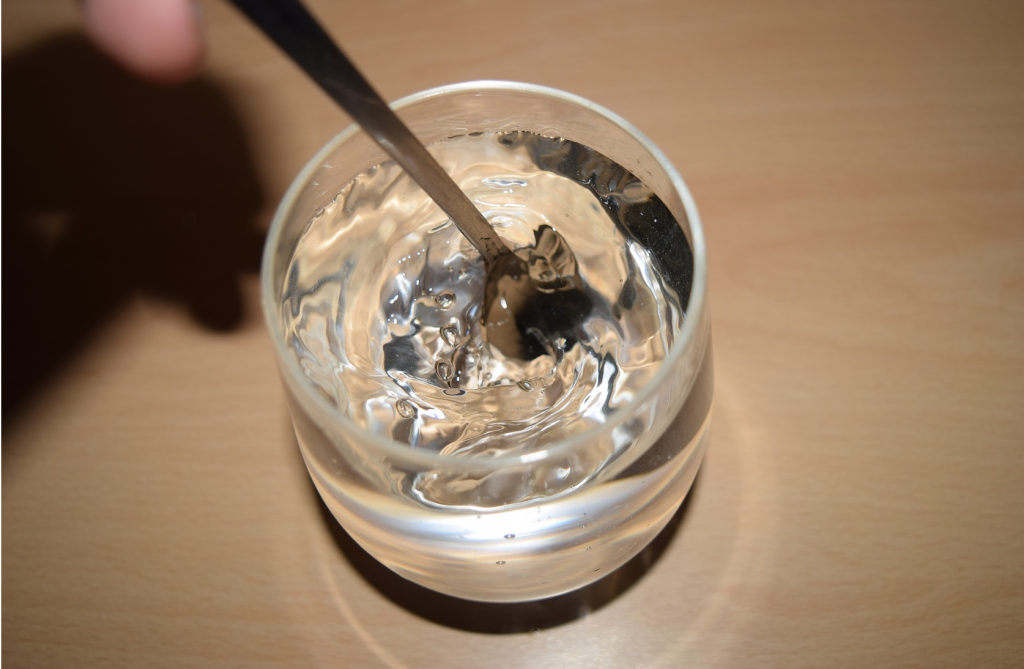
HPMC (Hydroxypropyl Methylcellulose) can be categorized into two distinct types based on their solubility characteristics: instant type (surface treated) and hot soluble type (non-surface treated).
Instant Type Surface Treat (HPMC Solubility in Water)
The instant type of HPMC is designed for rapid dispersion in cold water. Upon contact, it quickly disperses and seems to vanish within the liquid. At this stage, the solution exhibits no viscosity since the HPMC is merely suspended in the water rather than dissolved. After approximately two minutes, the viscosity of the mixture begins to increase gradually, ultimately forming a transparent viscous colloid. This behavior is attributed to the outer cellulose powder’s interaction with cold water, which leads to immediate thickening into a colloidal form while the inner cellulose remains encapsulated and dissolves slowly over time.
HPMC Applications
This instant type is versatile and can be utilized in various applications, including:
- Putty powder
- Mortar
- Liquid glues
- Coatings
There are no significant contraindications for its use in these applications.
Hot Soluble Type (Non-Surface Treated)
In contrast, the hot soluble type of HPMC tends to clump when mixed with cold water. However, it disperses rapidly in hot water, disappearing completely as it dissolves. As the temperature decreases, viscosity gradually develops until a transparent viscous colloid is formed. The clumping observed in cold water is due to the outer cellulose powder thickening upon contact with cold water while the inner cellulose remains isolated from direct contact with water.
Practical Considerations
In practical applications, particularly with dry mixes such as putty powder and mortar, it is not necessary to use hot water for dissolution. When these dry powders are mixed with water, HPMC particles are separated by other materials, allowing immediate viscosity development without lumping.
Recommended Uses
The hot soluble type is particularly suited for:
- Dry mix mortars
- Putty powders
However, caution should be exercised when using this type in liquid formulations like glues and paints due to potential lumping issues.
Comparative Analysis
| Feature | Instant Type (Surface Treated) | Hot Soluble Type (Non-Surface Treated) |
|---|---|---|
| Dispersion in Cold Water | Rapidly disperses | Clumps initially |
| Dissolution | Gradual increase in viscosity | Rapid dispersion in hot water |
| Final Viscosity | Forms transparent viscous colloid | Forms transparent viscous colloid |
| Recommended Applications | Wide range (putty, glue, coatings) | Primarily in dry mixes (putty, mortar) |
| Water Retention & Stability | Lower compared to hot soluble | Higher stability and retention |
Hot soluble type (Non-surface treated) HPMC dissolution methods
If the hot soluble type (Non-surface treated) HPMC is added directly to the water, agglomeration will occur before dissolution. However, dissolving in this way is very slow and difficult. Here we recommend three dissolution methods for end users based on different applications:
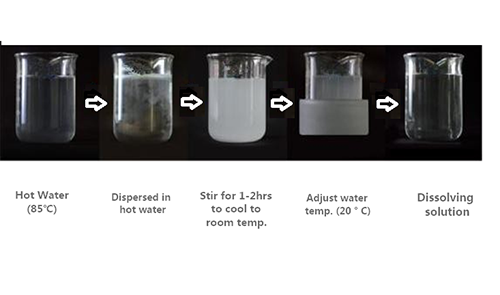
1. Hot water dissolution method: Since HPMC is not dissolved in hot water, the initial HPMC can be uniformly dispersed in hot water and then rapidly dissolved upon cooling. Two typical methods as follows:
Adding hot water(85°C) into the container. Hydroxypropyl Methyl Cellulose was gradually added with slow stirring, and the HPMC floated on the surface of the water, and then gradually formed a slurry, and the slurry was cooled with stirring.
Adding 1/3 or 2/3 of the required amount of hot water(85°C) to the vessel , gradually add HPMC to hot water and keep stirring. Cold water or ice water is then added to the hot cement slurry to achieve the desired level. Stirring is continued to cool the mixture.
2. Powder mixing method: Mix the HPMC powder with a large amount of other powdery substances, mix well with a blender, and then add water to dissolve. At this time, HPMC can be dissolved without agglomeration, because each tiny small corner has only a little HPMC. The powder will dissolve immediately upon contact with water. – This method is used by putty powder and mortar manufacturers.
3. Organic solvent humidification dissolution method: HPMC is pre-dispersed or wetted with an organic solvent such as ethanol, ethylene glycol or oil, and then dissolved in water, and HPMC can be easily dissolved.
Instant type (Surface treated) HPMC dissolution methods
Surface treatment powders are specially developed to prevent lumping in wet-mixing applications such as paint and emulsion applications. In order to prepare a solution from the surface-treated powder, the powder is directly placed in cold water. Over time, a fully developed solution of suitable viscosity was prepared by continuously stirring the solution.
Note: In order to dissolve quickly, the instant type (Surface treated) HPMC will dissolve rapidly after adjusting PH value to 8-10 by adding ammonia or alkali water, forming a solution.
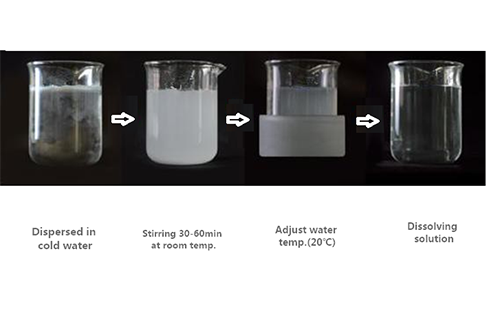
NON-SURFACE TREATED HPMC
In short, for different types of products, the correct method can be fully dissolved. If agglomeration occurs during dissolution, it is caused by insufficient agitation or direct addition of ordinary models to cold water. At this time, it should be stirred quickly. In addition, if bubbles are generated during dissolution, it can be left to stand or defoamer added.